
Best PRP Hair Treatment in Dubai
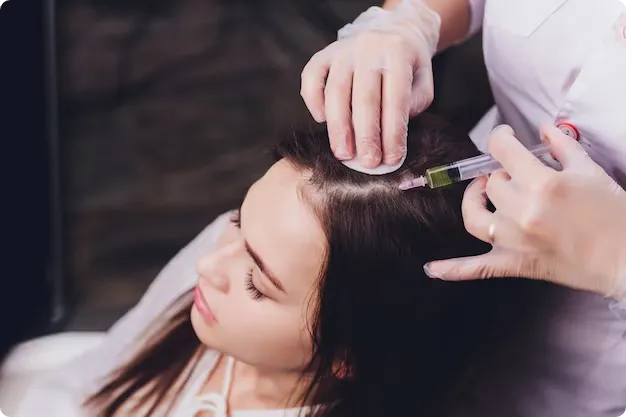
Dr. Sima has earned her reputation as the specialist Dubai residents trust for the best PRP hair treatment, thanks to her evidence-based approach and hands-on precision with every session. She personally performs each treatment, using your own blood’s growth factors to slow shedding and support natural regrowth, so there’s no foreign substance involved. This non-surgical option, part of her full range of PRP treatments in Dubai, suits any individual dealing with early to moderate hair thinning.
What Is PRP Hair Treatment and What Can It Treat?
PRP stands for platelet-rich plasma. We draw a small blood sample and spin it in a centrifuge to separate out the platelets. Dr. Sima then injects this concentrated plasma directly into your scalp, targeting the areas where hair growth has slowed.
Platelets carry growth factors your body already uses for healing. Concentrated and delivered to the scalp, they stimulate hair follicles and encourage weak follicles back into an active growth phase.
PRP hair treatment addresses:
- Androgenetic alopecia (pattern hair loss) at the crown or hairline
- Female pattern hair loss, including a widening part or diffuse thinning
- Postpartum hair shedding that hasn’t resolved on its own
- Stress-related or seasonal hair shedding
- Post-transplant recovery, to support graft survival
- Early-stage hair loss, while the window for regrowth is still open
PRP cannot regrow hair where follicles no longer exist. In fully bald areas, nothing remains for it to stimulate.
Specific Services
PRP
Revitalize your skin naturally with PRP therapy

Pigmentation
Restore even skin tone with advanced pigmentation

Botox Injection
Smooth wrinkles quickly with expert Botox injections
Who Is PRP Hair Treatment For?
PRP hair treatment is suited to patients who still have active follicles, just underperforming ones.
- Men with androgenetic alopecia, especially thinning at the crown or hairline
- Women with female pattern hair loss, including a widening part or diffuse thinning
- Postpartum hair shedding that has not resolved on its own
- Stress-related or seasonal hair shedding
- Patients who have had a hair transplant and want to support graft survival
- Early-stage hair loss, where the window for regrowth is still open
PRP cannot regrow hair where follicles are no longer present. In fully bald areas, there is nothing left for it to stimulate.
Benefits of PRP Hair Treatment
- Non-surgical and minimally invasive, with no incisions or downtime
- Uses your own blood, so there is no risk of allergic reaction to a foreign substance
- Supports natural hair growth rather than masking hair loss
- Improves scalp health alongside hair density over a full course of sessions
- Can be combined with other regenerative treatments for a broader hair restoration plan
What Happens During Your PRP Session
- A small blood sample is drawn, similar to a routine blood test
- The sample is spun in a centrifuge to separate the platelet-rich plasma
- A numbing cream is applied to the scalp to keep the injections comfortable
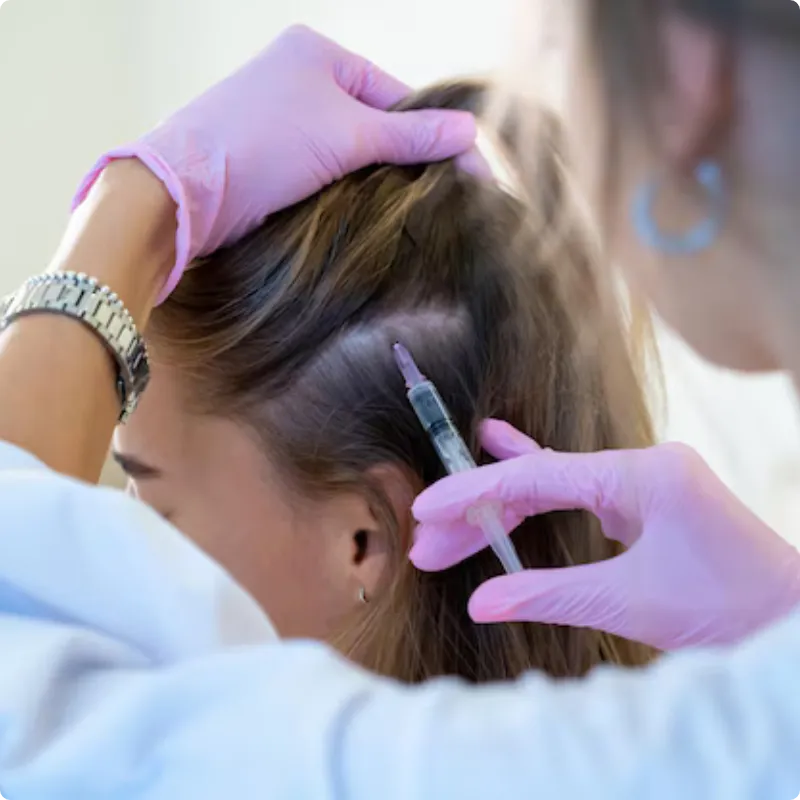
- Dr. Sima injects the plasma into the targeted areas of the scalp
- The full appointment typically takes 45 to 60 minutes
There is no downtime. Most patients return to normal activities the same day.
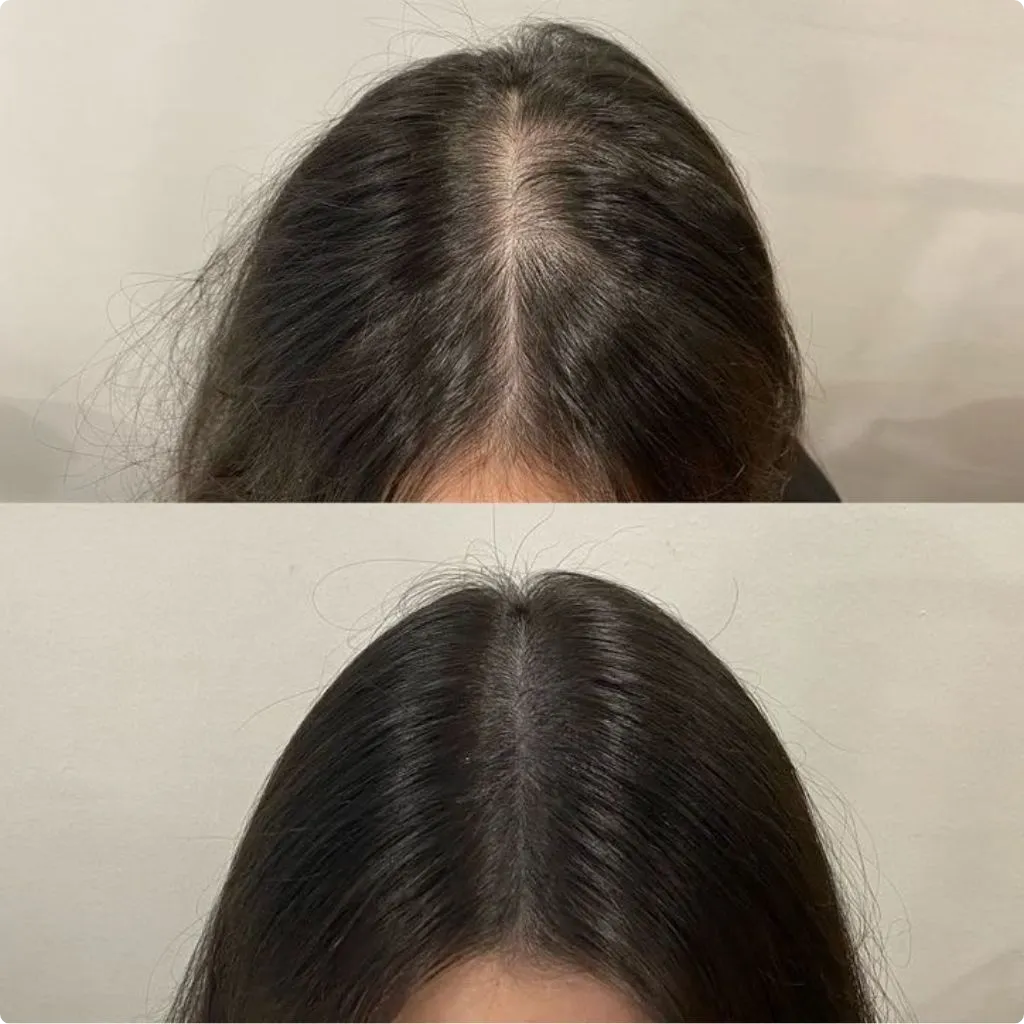
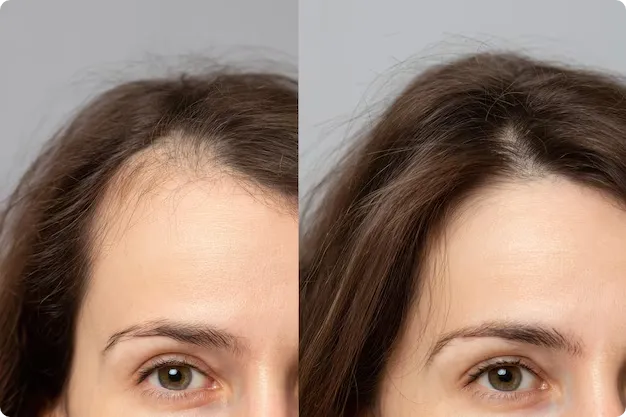
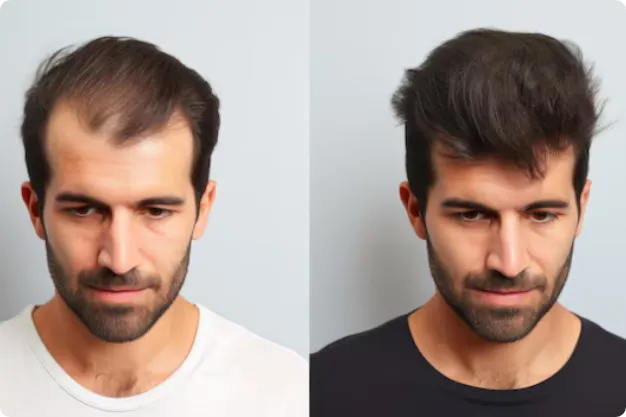
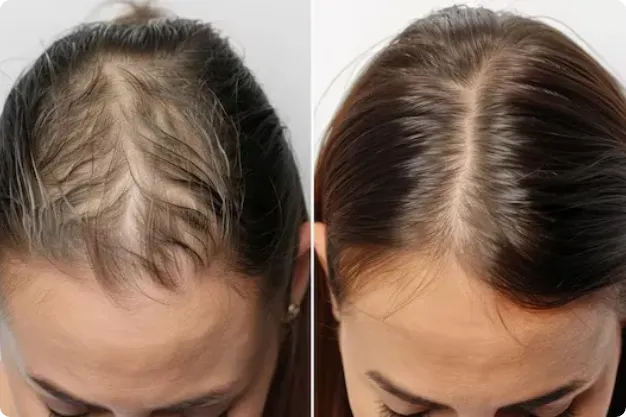
PRP Hair Before and After: What to Expect
Results build gradually rather than appearing overnight.
- Weeks 6 to 8: many patients notice reduced shedding
- Months 3 to 4: visible improvement in hair density typically becomes clear
- Month 6: results are usually assessed after a full course of sessions
This timeline reflects clinical research on PRP for androgenetic alopecia published on PMC (NIH), which documents improved hair density in patients assessed several months after treatment, while also noting that results vary between patients since PRP protocols are not yet fully standardised.
Dr. Sima will not guarantee a specific result. She will give you an honest assessment of your scalp and a realistic view of what PRP can achieve for your particular pattern of hair loss.
How Many PRP Sessions Will You Need?
Most patients begin with three to four sessions, spaced four to six weeks apart. After the initial course, a maintenance session every four to six months helps protect results. Your exact plan is confirmed after Dr. Sima assesses your scalp and hair loss pattern directly.
Is PRP Hair Treatment Painful?
Most patients describe mild discomfort rather than pain. A topical numbing cream is applied before injections to keep the sensation manageable. Any mild stinging during the session settles quickly once it ends.
Who Should Avoid PRP Hair Treatment
- Patients with active scalp infections or skin conditions at the injection site
- Patients with certain blood disorders or on specific blood-thinning medication
- Pregnant or breastfeeding patients
Dr. Sima reviews your full medical history during consultation before recommending treatment.
Other Hair Restoration Options With Dr. Sima
- PRP is one part of a broader range of regenerative hair treatments available.
- For a fibrin-based alternative with a different growth factor release profile: PRF in Dubai.
- For a non-injection option to support scalp rejuvenation, alone or alongside PRP: Laser Therapy for Hair Growth
Why Choose Dr. Sima for PRP Hair Treatment in Dubai
Dr. Sima personally performs every PRP hair treatment session. She uses evidence-based protocols and reviews your scalp and hair loss pattern directly before recommending treatment. Results are never guaranteed, but every plan is built around what is realistic for your specific case, not a generic package.
Book Your PRP Hair Consultation
Ready to find out if PRP is right for your hair? Book a consultation with Dr. Sima and get a straight, personalised answer.
Frequently Asked Questions
PRP hair treatment uses a concentrated portion of your own blood, rich in growth factors, injected into the scalp to stimulate weak or inactive hair follicles.
Platelets carry growth factors that signal tissue repair. Concentrated and injected into the scalp, they encourage hair follicles to become more active and support natural regrowth.
Good candidates have early to moderate hair thinning with follicles that are still present but underactive. It is less effective on scalp areas that are already completely bald.
Most patients find it mildly uncomfortable rather than painful, especially with numbing cream applied beforehand.
Most patients need three to four initial sessions, spaced four to six weeks apart, followed by maintenance sessions every few months.
Quick Links
Certified Endolift Specialist
at Dynasty Clinic
Copyright © 2026 Dr. Sima . All Rights Reserved. Developed by Digital Marketing Agency in Dubai