
Can Endolift Delay the Need for a Facelift?
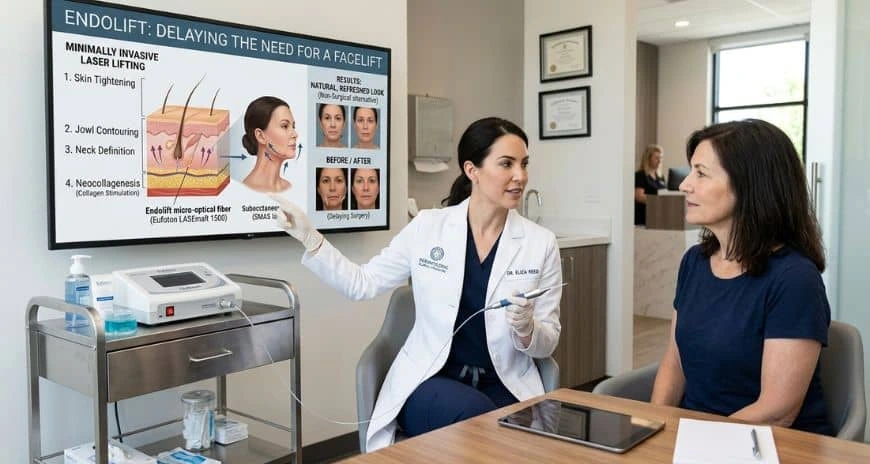
If you’ve noticed early sagging around your jawline or neck but aren’t ready for surgery, you’ve probably asked yourself: can Endolift delay facelift procedures? You’re not alone. More people are searching for non-surgical facial rejuvenation options before committing to a full surgical facelift.
The good news is that Endolift has become one of the most talked-about treatments in aesthetic clinics, from busy city med-spas to boutique dermatology practices in smaller regional towns. It promises tighter, firmer skin without incisions, scars, or lengthy downtime.
But does it actually work as a facelift alternative? Let’s break down what Endolift is, how it works, and whether the science backs up the buzz.
What Is Endolift?
Endolift in Dubai is a minimally invasive laser treatment designed to tighten loose skin and stimulate collagen production. Unlike a traditional facelift, it doesn’t require large incisions or general anesthesia.
Instead, a thin laser fiber (thinner than a strand of spaghetti) is inserted under the skin through a tiny entry point. The laser energy heats the deeper skin layers, encouraging collagen and elastin regeneration while gently contracting existing tissue.
Patients often choose Endolift for areas like:
- The jawline and jowls
- Under-chin (submental) fullness
- Neck laxity
- Under-eye hollows and mild bags
Because it’s performed under local anesthesia, most people are back to normal activities within a day or two — a major draw for anyone comparing non-surgical skin tightening to invasive surgery.
How Does Endolift Work?
Endolift works on a simple principle: controlled heat triggers your body’s natural healing response.
- A local anesthetic numbs the treatment area.
- A fine laser fiber is inserted just beneath the skin’s surface.
- Laser energy delivers heat to the fat and connective tissue.
- This heat causes immediate tissue contraction and stimulates new collagen over the following weeks.
The result is a gradual firming and lifting effect that continues to improve for two to three months after treatment. Many clinics recommend a short course of two to three sessions, spaced a few weeks apart, for optimal results.

Endolift vs. Traditional Facelift: What’s the Difference?
This comparison matters most to people weighing their options.
Downtime
A surgical facelift typically requires one to two weeks of significant recovery, with swelling and bruising lasting longer. Endolift usually involves minimal downtime, often just a day or two of mild swelling.
Cost
Endolift is generally more affordable than facelift surgery, making it an attractive entry point for people exploring cosmetic treatments near them for the first time.
Results
A facelift produces dramatic, long-lasting results by surgically removing excess skin and repositioning underlying tissue. Endolift offers subtler, more gradual improvement through skin tightening and collagen stimulation, without removing tissue.
Anesthesia and Risk
Facelifts require general or deep sedation anesthesia, carrying higher surgical risk. Endolift uses local anesthesia only, which many patients find far less intimidating.
So, Can Endolift Delay the Need for a Facelift?
Here’s the honest answer: Endolift can delay, but not permanently replace, a facelift for many patients, particularly those with mild to moderate skin laxity.
For people in their late 30s to mid-40s who are just starting to notice sagging, Endolift can meaningfully improve skin firmness and postpone surgery, sometimes by several years. It works especially well for early jowling, a slightly loose neck, or mild jawline definition loss.
However, for patients with significant excess skin or advanced sagging, Endolift alone typically isn’t enough. In these cases, aesthetic practitioners often recommend it as a complementary treatment either before or after facelift surgery, rather than a full substitute.
What Does the Evidence Say?
Clinical studies on fractional and interstitial laser skin tightening, the technology behind Endolift, show measurable improvements in skin elasticity and collagen density following treatment. While large-scale, long-term studies specifically on Endolift are still emerging, results reported by practitioners align with broader laser dermatology research on collagen remodeling.
Cosmetic doctors frequently describe Endolift as a “prehab” or maintenance treatment: ideal for slowing visible aging and maintaining results between more invasive interventions.
What Patients Say
Many patients who choose Endolift report:
- Noticeably firmer skin within four to six weeks
- A more defined jawline without surgical scars
- Increased confidence in delaying a facelift decision
- Satisfaction with the quick recovery, allowing a return to work or social plans almost immediately
Of course, individual results vary depending on skin quality, age, and lifestyle factors like sun exposure and smoking.
Who Is a Good Candidate for Endolift?
Endolift tends to work best for people who:
- Are in their 30s to early 50s
- Have mild to moderate skin laxity
- Want to avoid surgery for now
- Have realistic expectations about gradual, natural-looking results
People with more advanced skin sagging, significant excess skin, or those seeking dramatic transformation are usually better suited to surgical options.
A consultation with a qualified aesthetic practitioner in your area is the best way to determine whether Endolift, a facelift, or a combination approach fits your goals.
Final Thoughts
For the right candidate, Endolift genuinely can delay a facelift, sometimes by years, while offering a natural, gradual improvement in skin firmness. It’s not a permanent replacement for surgery in every case, but it’s a compelling non-surgical option worth discussing with a local cosmetic specialist, whether you’re in a major city or a smaller regional community with growing access to advanced laser treatments.
FAQs
Results typically last twelve to eighteen months, though this varies by individual. Many patients maintain results longer with periodic touch-up sessions.
Yes, Endolift is considered safe when performed by a trained, licensed practitioner. It has a strong safety profile with minimal side effects, mainly mild swelling or bruising.
For some patients with early signs of aging, Endolift can significantly delay the need for a facelift. However, it isn't a full replacement for patients with advanced skin sagging or excess skin.
Quick Links
Certified Endolift Specialist
at Dynasty Clinic
Copyright © 2026 Dr. Sima . All Rights Reserved. Developed by Digital Marketing Agency in Dubai