
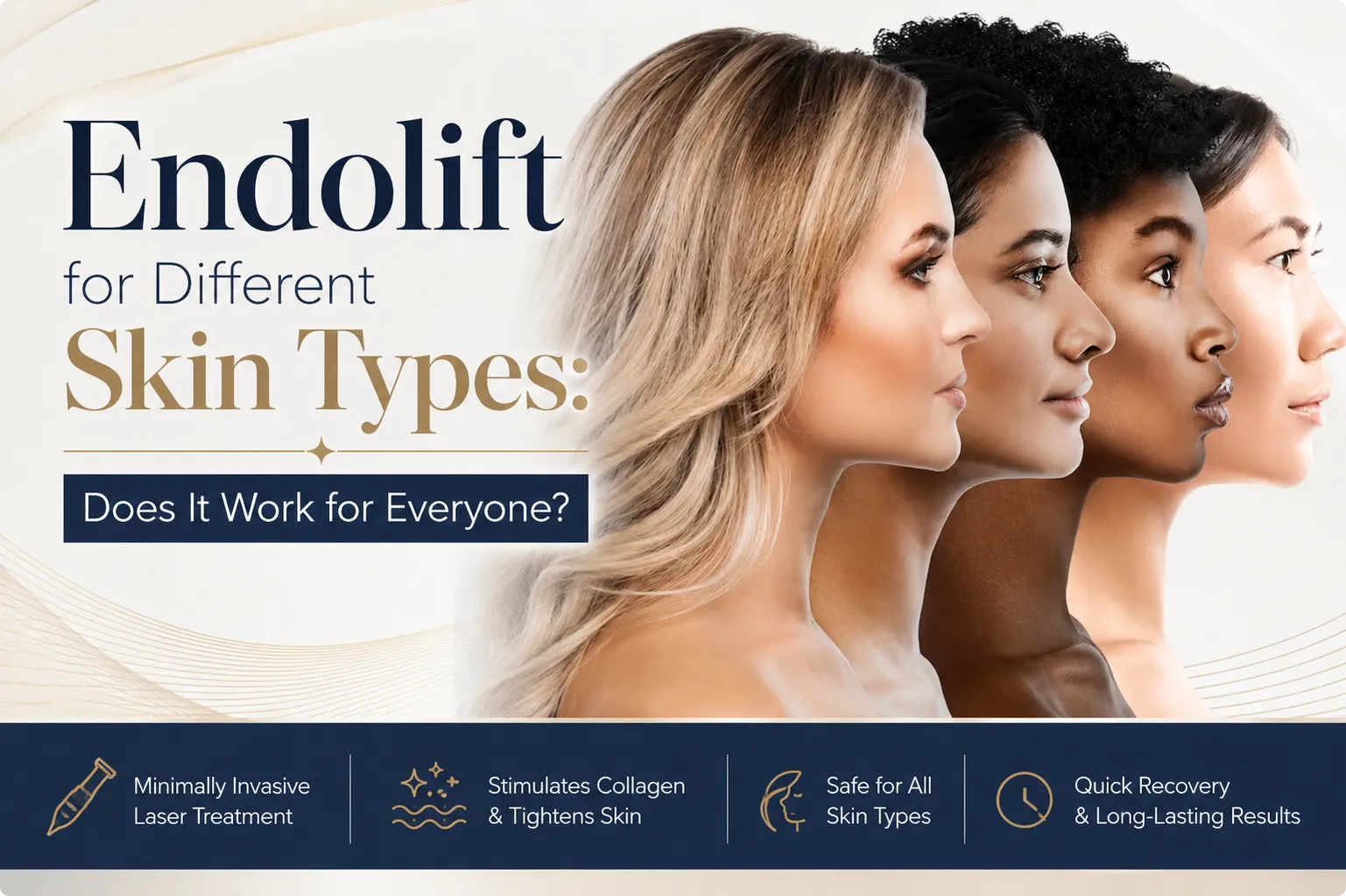
Endolift for Different Skin Types: Does It Work for Everyone?
What Is Endolift?
Endolift is a minimally invasive laser treatment for skin tightening. A thin laser fiber is inserted under the skin through a tiny entry point. The laser energy heats the deeper tissue. This stimulates collagen and elastin, and can gently reduce small pockets of fat. There are no large incisions and no stitches. Most patients return to normal activity the same day.
Why Skin Type Matters for Any Laser Treatment
Skin type affects how much melanin your skin contains. Melanin absorbs light. This matters because laser devices work by delivering targeted light energy. More melanin in the skin means more careful calibration is needed to avoid affecting pigment in the outer skin layer.
Doctors commonly use the Fitzpatrick scale to describe this, ranging from Type I (very fair, always burns) to Type VI (deeply pigmented, never burns). Endolift’s laser fiber works beneath the skin’s surface, which is part of why it tends to carry a lower pigmentation risk than surface lasers. Still, skin type is always assessed individually.
Endolift for Dark Skin (Fitzpatrick IV–VI)
Darker skin tones carry a higher risk of post-treatment hyperpigmentation or hypopigmentation with laser-based treatments generally. A narrative review of noninvasive cosmetic treatments for Fitzpatrick skin types IV–VI, published on PMC (NIH), confirms that patients with darker skin face a higher risk of pigment changes after laser and light-based procedures, and recommends tailored treatment strategies rather than one-size-fits-all settings.
This does not mean Endolift in dubai is unsafe for dark skin. It means the approach must be adapted.
- Laser settings are calibrated specifically for higher melanin content
- Sun avoidance before and after treatment is emphasised more strictly
- Dr. Sima reviews your individual skin history, including any past pigmentation issues, before treatment
Endolift for dark skin is generally considered safe when performed by an experienced practitioner using appropriate settings, but this is a case where experience genuinely matters.
Endolift for Sensitive Skin
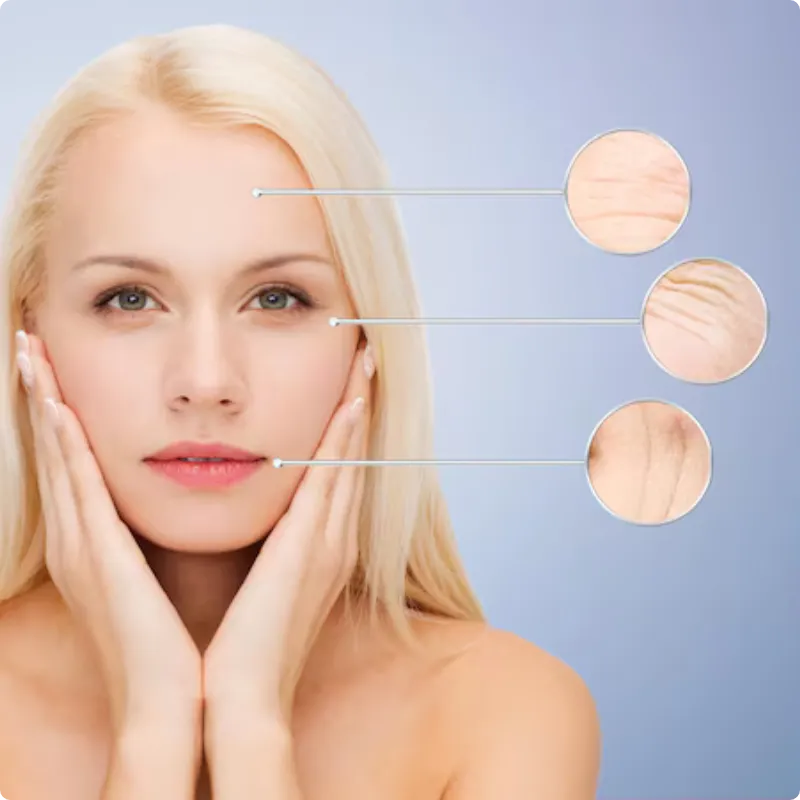
Sensitive skin can still be treated with Endolift, but the approach is more conservative. Dr. Sima typically starts with lower energy settings and reviews how your skin responds before progressing further. Patients with active skin conditions, such as eczema or rosacea flare-ups, may need those conditions stabilised first.
Endolift for Mature Skin
Mature skin, often with more pronounced sagging and collagen loss, is one of the most common candidates for Endolift. Thinner, more fragile skin in older patients does mean settings are adjusted, but age alone rarely rules someone out. Most patients between their thirties and sixties see meaningful improvement, though the specific concern addressed shifts with age, from early prevention to more visible jowling and mid-face descent.
Endolift for Oily, Dry, and Combination Skin
Skin type in terms of oiliness or dryness, rather than pigmentation, has less impact on how Endolift performs, since the laser fiber works beneath the surface layer.
- Oily skin: generally unaffected by Endolift; oil production is not targeted by the treatment
- Dry skin: may benefit from added moisture support during recovery, but responds well to treatment
- Combination skin: treated the same way as the rest of the face, with no special adjustment usually needed
Does Skin Type Affect Endolift Results?
Skin type affects safety considerations more than it affects the final result. Collagen and elastin respond to heat energy in broadly similar ways across skin types. What changes is the calibration needed to protect pigment, and how closely a patient’s skin needs to be monitored afterward. Dr. Sima does not promise identical results for every patient. Skin quality, age, lifestyle, and how well aftercare instructions are followed all influence the outcome, regardless of skin type.
Who Should Be Cautious, Regardless of Skin Type
- Patients with active skin infections in the treatment area
- Patients with a history of keloid or hypertrophic scarring
- Pregnant or breastfeeding patients
- Patients with unmanaged autoimmune skin conditions
These factors matter more than skin tone alone when deciding if Endolift is appropriate.
Your Skin Type Assessment With Dr. Sima
Every Endolift consultation begins with a direct look at your skin, not a form or a quick assumption. Dr. Sima assesses your Fitzpatrick skin type, skin thickness, sensitivity, and any history of pigmentation changes. She then explains, honestly, what result is realistic for your specific skin, and adjusts her approach and aftercare guidance to match. To see how this fits into the full Endolift procedure for the face, read: Face Endolift in Dubai.
Find Out What Endolift Can Do for Your Skin
Every skin type deserves an honest, individual assessment rather than a generic answer. Book a consultation with Dr. Sima to find out exactly what to expect for your skin.
FAQs
Endolift is suitable for the great majority of skin types, from fair to deeply pigmented. Darker skin tones require more careful calibration to reduce pigmentation risk, but this does not rule out treatment.
No single skin type gives dramatically better results than another. Fair to medium skin tones generally carry the lowest pigmentation risk, but outcome quality depends more on skin laxity, age, and aftercare than on skin type alone.
Yes. Endolift is generally considered safe for dark skin when performed with settings calibrated for higher melanin content and with careful sun protection before and after treatment.
Yes, with a more conservative approach. Dr. Sima typically starts sensitive skin at lower energy settings and monitors the response before adjusting further.
Quick Links
Certified Endolift Specialist
at Dynasty Clinic
Copyright © 2026 Dr. Sima . All Rights Reserved. Developed by Digital Marketing Agency in Dubai