
How to Get Rid of Bunny Lines on the Nose: Treatment Options and Results
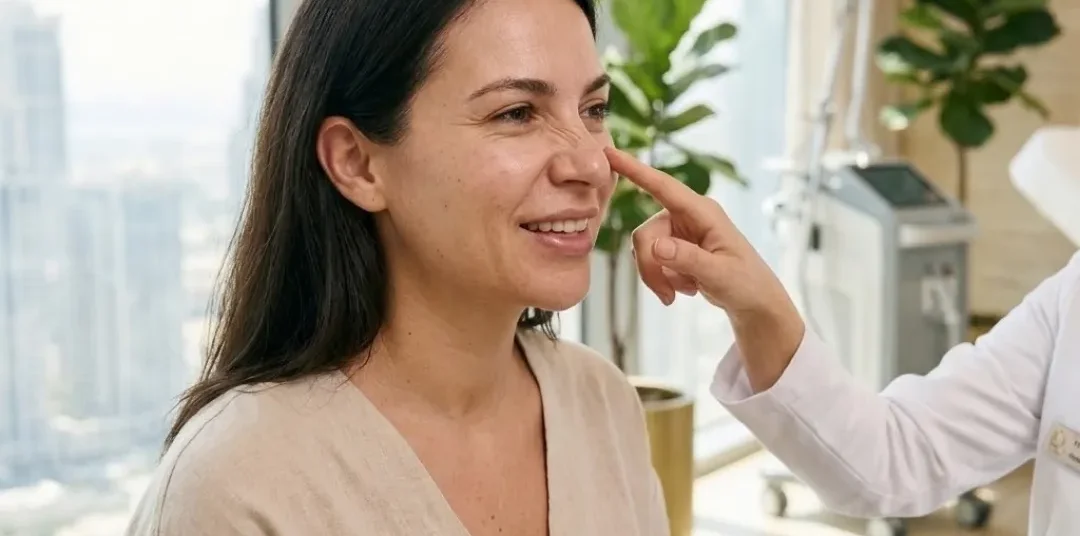
Bunny lines on the nose show up as thin diagonal creases along the sides of your nose bridge. You’ll notice them most when you laugh, squint or scrunch your face. Plenty of people spot them in a selfie and can’t unsee them after that. The good news is that you’ve got options. Some take a quick appointment. Others take months of steady habits.
What are bunny lines?
Bunny lines are fine wrinkles that fan out from the top of the nose toward the cheeks. The name comes from the way a rabbit twitches its nose. The muscle behind them is the nasalis. Each time you wrinkle your nose, it folds the skin above it.
There are 2 types:
- Expression lines show up only while your face moves.
- Etched lines stay visible when your face is relaxed.
Most people have a bit of both. Which type you have decides which treatment will work best. Bunny lines are harmless. Treating them is a cosmetic choice.
How bunny lines differ from other facial lines
People often mix them up with other creases.
- Frown lines sit between the eyebrows and run vertically.
- Forehead lines run horizontally across the forehead.
- Crow’s feet fan out from the outer corners of your eyes.
- Nasolabial folds curve from the sides of the nose down to the corners of the mouth.
Bunny lines run diagonally on the nose itself. That placement matters because each line type needs a different treatment plan.
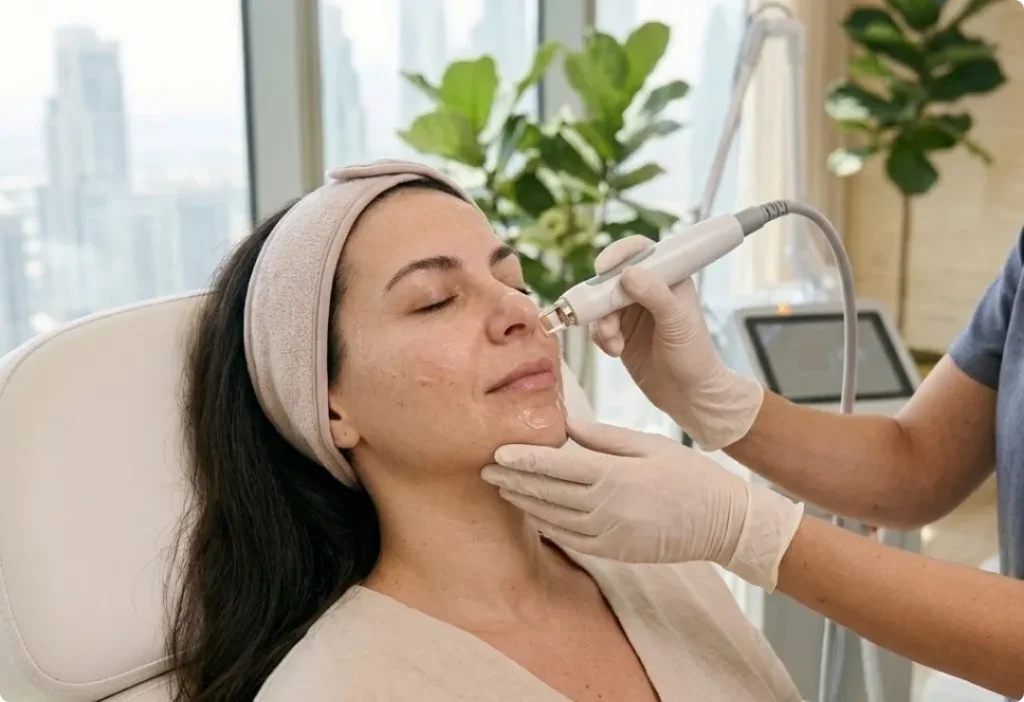
What causes bunny lines on the nose?
Several things stack up over the years.
Repeated muscle movement
Laughing, sneezing, squinting at screens and scrunching your nose all fold the same patch of skin. Do that thousands of times and the crease starts to stick. Young skin snaps back after each fold. Over time it loses that bounce, so the fold lingers a little longer each year. That’s why bunny lines often start as faint marks while you laugh and later stay visible at rest.
Sun damage and aging skin
Your skin makes less collagen as you age and UV exposure speeds that up. Thinner skin holds a fold longer. Hydration treatments such as skin boosters work on that side of the problem. UV light breaks down collagen and elastin, the proteins that keep skin firm. Strong sun in Dubai makes daily sunscreen a basic part of any plan.
Botox in other areas of the face
Some people notice bunny lines more after forehead or frown line treatment. When nearby muscles relax, the nasalis can pick up the slack. It happens to some patients so a good injector checks for it before treating the forehead. Think of it as a muscle balance. Once the forehead or the area between your brows calms down, the face can lean on the nasalis more when you scrunch or laugh.
Squinting and screen time
Long hours on a phone or laptop make many people squint and scrunch without noticing. Uncorrected vision adds to it. Dry eyes, glare and old prescriptions all push people to squint. If you catch yourself scrunching at your screen, an eye exam is a simple first step.
Genetics and expressions
Some people just have a more expressive nose. If your parents had bunny lines, you’re more likely to get them too. Face shape and muscle strength run in families. Some people have a strong nasalis that can fold the skin deeply even in their 20s.
Bunny lines treatment: your main options
If you’re wondering how to get rid of bunny lines, start by asking whether your lines move or stay put. Any nose wrinkles treatment begins with that answer.
Here’s how the common choices compare.
Option | Best for | How long it lasts | Downtime |
Botox | Lines that appear when you move | About 3 to 4 months | Little to none |
Filler | Lines that stay at rest | Varies by product | Mild swelling or bruising |
Skin boosters | Dry, crinkly texture | Varies by product | Small bumps for a day or 2 |
Skincare | Prevention and mild texture | Only while you use it | None |
Botox for bunny lines
Botox is the first choice for most people. It relaxes the nasalis so the skin stops folding when you laugh or scrunch. Dr. Sima only treats the nose when a muscle is the cause. She watches your nose at rest and while you smile and scrunch before she decides anything. You can read more about this on her page for nose Botox.
How the treatment works
A few tiny injections go into the muscles on each side of the nose. The doses are small because the muscles are small.
What it feels like
Most people describe a quick pinch. The injections take a few minutes.
What happens at your consultation
The visit starts with a look at your nose at rest. Then Dr. Sima asks you to smile, frown and scrunch so she can see which muscles work hardest. From there she maps the injection spots to your anatomy. She also tells you plainly if Botox won’t help your type of line.
Bunny lines filler
Filler adds volume under a crease that stays visible at rest. It’s used less often here because the skin around the nose sits close to important blood vessels. That’s why you want an experienced doctor for dermal filler near the nose. Dr. Sima will tell you straight if filler makes sense for your lines.
Skin boosters
Skin boosters add hydration under the skin and soften fine, crinkly texture. They pair well with Botox when you want smoother skin and less movement.
Skincare at home
Sunscreen with SPF 30 or higher every morning protects the collagen you’ve got left. A retinoid at night improves texture over time (start with 2 nights a week so your skin adjusts). Creams can soften fine texture lines. They can’t relax a muscle.
Combining treatments
Many plans mix 2 approaches. Botox calms the movement while a skin booster improves texture. Filler comes in only for lines that stay deep at rest. Dr. Sima builds the plan after she sees how your nose moves.
Who’s a good candidate for bunny lines treatment?
Treating bunny lines on the nose works best when you:
- Notice creases mainly when you laugh or scrunch
- Want softer lines and natural expression
- Are fine with temporary results
- Have realistic expectations about deep lines
If you nodded at most of those, a short consultation will confirm whether Botox suits your lines.
Bunny lines before and after: what results look like
Botox works gradually. This is the usual timeline.
When | What happens |
Day 0 | You get your injections |
Days 3 to 7 | Muscle movement starts to drop |
Day 14 | You see the full effect |
Months 3 to 4 | Movement slowly returns |
Timing varies from person to person.
If you’ve got a wedding or photo shoot coming up, book at least 2 weeks ahead. That gives the Botox time to reach its full effect and leaves room for a touch-up.
What you can realistically expect
The lines look softer when you laugh or scrunch your nose. Some barely move at all. Lines that are etched deep at rest may fade without vanishing. Those usually need dermal filler or a skin treatment alongside Botox.
How many sessions you’ll need
Most people repeat treatment every 3 to 4 months at first. Some stretch the gap later because the muscle stays calmer for longer. Dr. Sima sets a schedule after she sees how your lines respond to the first round.
How to read before and after photos
Photos can fool you. Check these 4 things:
- The lighting matches in both photos
- The expression is the same in both
- The photos come from the clinic’s own patients
- The “after” shot shows movement and not just a still face
Ask to see results for lines like yours. Bunny lines before and after photos mean the most when the patient looks like you.
Bunny lines Botox cost
Prices vary from clinic to clinic so no single number fits everyone. At Dr. Sima’s clinic, the quote comes after she examines how your nose moves. Doctors usually inject a small number of units into each side of the nose (often 2 to 4 per side). Your doctor sets the exact number after the exam.
What affects the price
- How much product your muscles need
- The doctor’s training and experience
- Whether you treat other areas at the same visit
- Consultation or follow-up fees
Why the cheapest quote can cost more
A low price often covers fewer units or a quick visit with no follow-up. If the result wears off early or looks uneven, you pay again to fix it. A fair quote covers the exam and a plan for follow-up.
Questions to ask before you book
- Does the consultation fee count toward treatment?
- Is a touch-up visit included?
- Which Botox brand will you use?
- Who does the injections?
Side effects and who should skip treatment
Most side effects are mild and short. Expect some redness, small bruises, tenderness or a headache that day. Rarer problems include uneven movement or a heavy feeling in the upper lip. Nose and lip muscles sit close together so product can spread. Trouble swallowing or breathing needs urgent medical care. The FDA’s prescribing information for Botox Cosmetic lists the full risks.
You should skip Botox if you:
- Are pregnant or breastfeeding
- Have an allergy to its ingredients
- Have a skin infection where the injections would go
- Have a nerve or muscle condition (talk to a doctor first)
Aftercare for bunny lines Botox
Dr. Sima gives you instructions before you leave. Common advice looks like this:
- Skip rubbing or massaging the area
- Stay upright for a few hours
- Avoid heavy workouts the first day
- Wait before facials or any pressure on the area
Mistakes that waste time and money
- Choosing on price alone (a cheap quote often comes with a rushed exam)
- Skipping the exam even though moving lines and resting lines need different plans
- Expecting filler to stop movement when it only adds volume
- Rubbing the area after injections and risking product spreading where it shouldn’t
- Forgetting sunscreen while the sun keeps breaking down collagen
Daily habits that keep bunny lines from deepening
Treatment works better when your habits help.
- Wear sunglasses outdoors so you squint less
- Get an eye exam if you squint at screens or signs
- Reapply sunscreen on long sunny days
- Skip smoking because it speeds up collagen loss
Why choose Dr. Sima in Dubai
Dr. Sima is a DHA-licensed general practitioner who focuses on non-surgical treatments such as Botox in Dubai and fillers. She personally performs every treatment and plans around natural-looking results.
Her plans stay small on purpose. The goal is softer lines and a face that still moves the way yours does. Every visit starts with watching your face move. That’s how she finds out whether your lines come from muscle or skin. She also offers a free initial consultation.
Final thoughts on bunny lines on the nose
Bunny lines on the nose come from muscle movement and aging skin. Botox handles the movement. Filler and skin boosters help with lines that stay at rest. Start with an exam. A good doctor watches your face move before recommending anything. Dr. Sima offers a free initial consultation if you want a straight answer on what will work for you. Call +971 55 505 1679 to book your visit.
FAQs
Rarely. Muscle habits and aging skin keep them around and they tend to deepen over time. Treatment and daily sun protection slow that down.
You can soften fine ones with sunscreen and a retinoid. You can't stop the muscle movement that creates them. That's why many people turn to Botox.
Yes, once the Botox wears off after about 3 to 4 months. Some people find the lines soften over repeated treatments because the muscle moves less.
It shouldn't when an experienced doctor injects the right spots. Rarely, the product spreads to nearby muscles and affects the upper lip or smile. That effect is temporary.
Most people feel a quick pinch. The needles are tiny. Redness or a small bump usually fades within hours.
Often yes. Many people treat the forehead or frown lines at the same appointment. Dr. Sima checks how your nose muscle behaves first.
Quick Links
Certified Endolift Specialist
at Dynasty Clinic
Copyright © 2026 Dr. Sima . All Rights Reserved. Developed by Digital Marketing Agency in Dubai