
How Many PRP Sessions Do You Need for Hair Growth? A Complete Guide
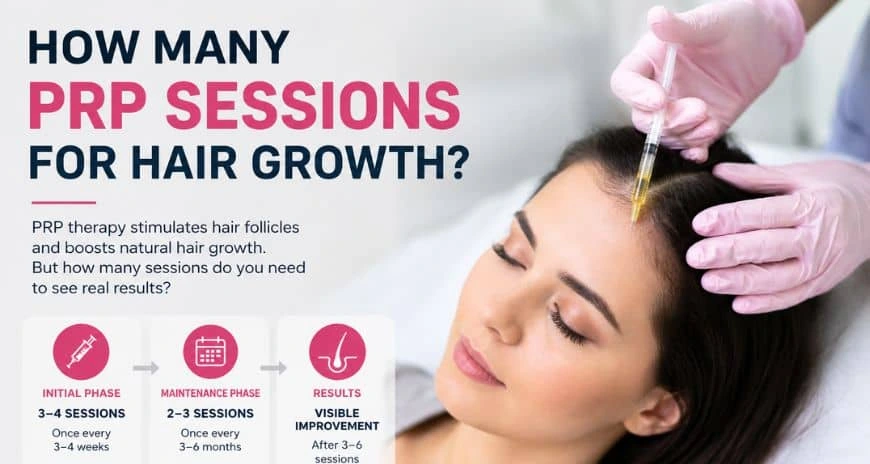
How many PRP sessions do you actually need for hair growth? It is one of the most common questions people ask before starting PRP hair treatment, and the honest answer depends on how advanced your hair thinning is, how your scalp responds to treatment, and whether you are treating shedding or trying to reverse existing thinning. This guide breaks down exactly what to expect, session by session.
What Determines How Many PRP Sessions You Need
No two scalps respond to PRP in exactly the same way. Several factors shape your treatment plan.
- Stage of hair loss. Early thinning responds faster than advanced thinning.
- Cause of shedding. Postpartum or stress-related shedding often needs fewer sessions than genetic pattern hair loss.
- Follicle health. Active but weak follicles respond better than follicles that have been dormant for years.
- Age and hormonal factors. Hormonal hair loss can require a longer initial course.
- Consistency. Skipping sessions or spacing them too far apart slows your results.
These factors are assessed during a consultation before recommending a session count, so your plan reflects your scalp rather than a generic package.
PRP Sessions by Hair Loss Stage
| Hair Loss Stage | Typical Initial Sessions | Spacing Between Sessions | Follow-Up |
|---|---|---|---|
| Early thinning (widening part, mild shedding) | 3 sessions | 4 to 6 weeks apart | Maintenance every 6 months |
| Moderate thinning (visible crown or hairline recession) | 4 sessions | 4 to 6 weeks apart | Maintenance every 4 to 6 months |
| Advanced thinning (significant density loss, still has active follicles) | 4 to 6 sessions | 4 weeks apart | Maintenance every 3 to 4 months |
These ranges are general guidance. Your exact plan is confirmed only after a direct scalp examination.
The Initial PRP Treatment Course: What to Expect Session by Session
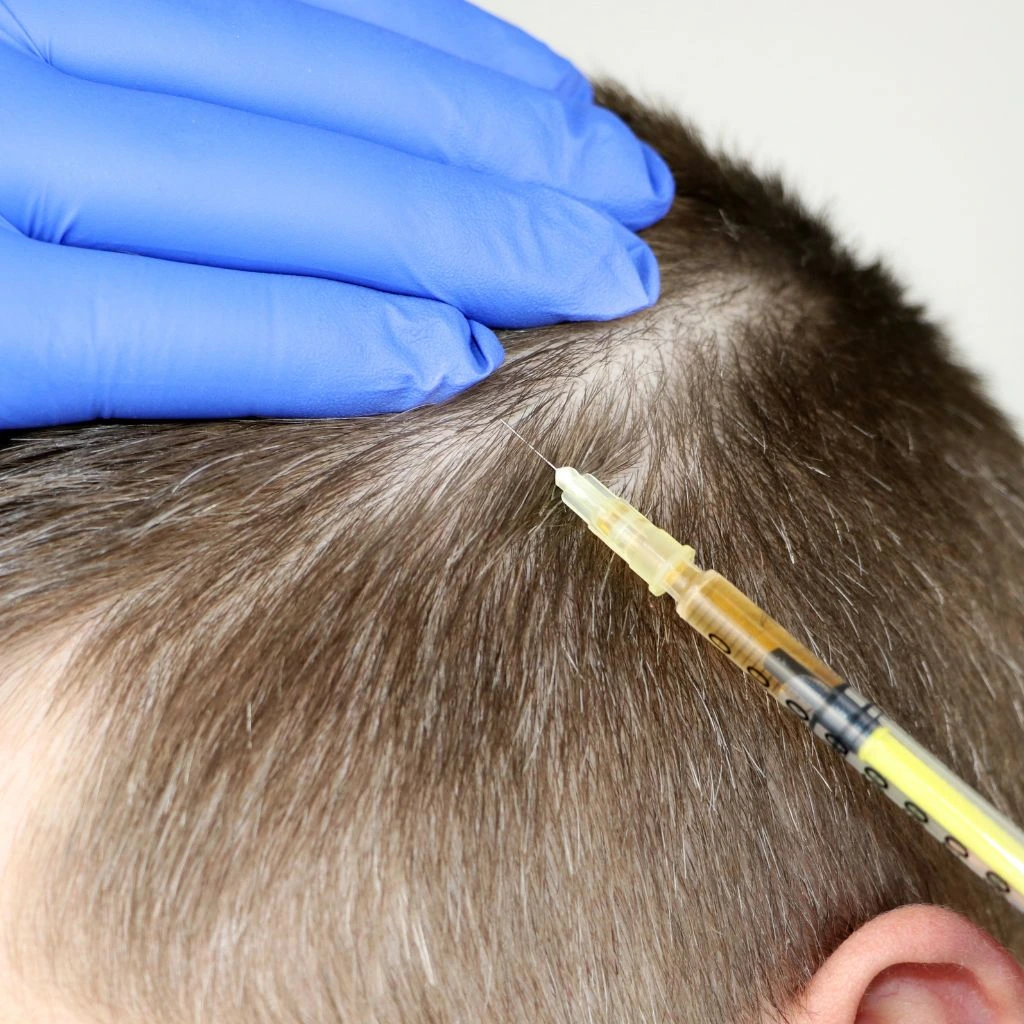
Most patients complete their initial course in three to six sessions, spaced four to six weeks apart. Spacing them closer together does not speed up results, since your follicles need time to respond between treatments.
- Session 1 establishes a baseline and begins stimulating dormant follicles.
- Session 2 builds on that stimulation. Many patients notice reduced shedding by this point.
- Session 3 is often when visible changes in scalp texture and hair thickness start to appear.
- Sessions 4 to 6 (for moderate to advanced thinning) continue building density and consolidate earlier gains.
Your scalp is reassessed at each visit, and the plan is adjusted if your response is faster or slower than expected.
Maintenance Sessions After Your Initial Course
PRP results are not permanent without upkeep. Once you finish your initial course, a maintenance session every three to six months helps protect your results and keeps follicles active.
- Early thinning cases often need maintenance only twice a year.
- Moderate to advanced cases may need maintenance every three to four months.
- Combining PRP with PRF hair treatment can extend the interval between sessions for some patients.
Skipping maintenance does not undo your progress immediately, but shedding gradually returns to its previous pattern over time.
Why PRP Session Plans Vary Between Patients
Two patients with a similar hairline can need a different number of sessions. This comes down to biology, not effort. Genetic hair loss tends to require more sessions than shedding triggered by stress, illness, or childbirth, since the underlying cause keeps working against your results. Blood quality, platelet concentration, and how well your scalp absorbs the growth factors also play a role.
This is why a medical history and hair loss pattern review comes before committing to a fixed session count. A plan built around a general average, rather than your specific scalp, often under-treats or over-treats the problem.
Realistic Timeline: What Results Look Like After Each Session
- After session 1 to 2 (weeks 6 to 8): reduced shedding is usually the first sign of a response.
- After session 3 to 4 (months 3 to 4): visible improvement in hair density typically becomes clear.
- After your full course (month 6): results are assessed properly, and your maintenance schedule is set.
Clinical literature on PRP for androgenetic alopecia supports this general pattern, showing improved hair density in patients assessed several months after treatment, while also noting that individual results vary since PRP protocols are not yet fully standardised across clinics.
When to Combine PRP With Other Hair Restoration Treatments
PRP works well on its own, but some patients get better results combining it with other regenerative treatments.
- PRF in Dubai uses a different growth factor release profile and can be alternated with PRP for a broader restoration plan.
- Post-transplant patients often use PRP alongside their recovery protocol to support graft survival, which can change the recommended session frequency.
- Laser therapy for hair growth is a non-injection option some patients add between PRP sessions to support scalp health.
Combination treatments are only recommended where they genuinely improve your outcome, not as a routine upsell.
FAQs
Most patients need three to six sessions depending on the stage of hair loss, spaced four to six weeks apart, followed by maintenance sessions every three to six months.
Spacing sessions too far apart during your initial course can slow your results, since your follicles need consistent stimulation to respond.
Ongoing maintenance every few months is recommended to protect results, but the frequency decreases significantly once you complete your initial course.
Quick Links
Certified Endolift Specialist
at Dynasty Clinic
Copyright © 2026 Dr. Sima . All Rights Reserved. Developed by Digital Marketing Agency in Dubai