
How to remove pigmentation from face: treatments that work in Dubai
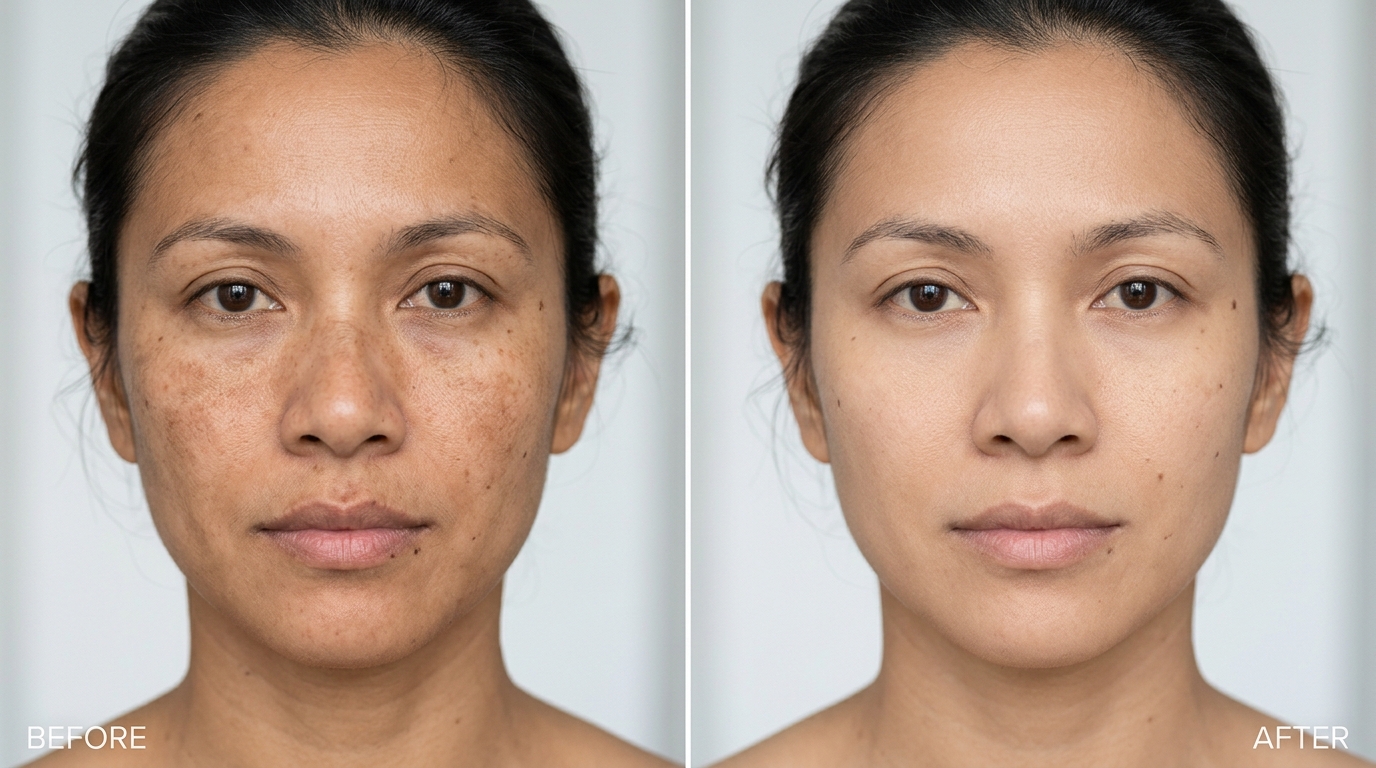
Dark patches on your cheeks. Brown spots from one long summer. A mark where a pimple used to be that refuses to leave.
If you’re searching for how to remove pigmentation from face, you want a real plan and an honest timeline. This guide gives you both. It covers the causes, the home care that helps, the clinic treatments worth your money and what to expect in Dubai, where UV levels stay high for most of the year.
What causes facial pigmentation?
Pigmentation is extra melanin sitting where you don’t want it. Melanin is the pigment your skin makes to absorb UV light. When skin gets stressed or irritated, the pigment cells (called melanocytes) overproduce and the color settles in uneven patches.
The cause decides the treatment. So it helps to know the main causes of facial pigmentation.
Sun and heat
UV light is the biggest driver. Years of exposure leave sun spots (also called age spots) on the cheeks, nose and forehead. UV in the UAE stays strong on cloudy days and passes through car windows. Heat can also darken melasma, which is why summer is often the hardest season.
Here’s a pattern dermatologists see often: darker spots on the left cheek of people who drive a lot. The sun comes through the driver’s window every day for years. Dubai commutes make that very easy to build up.
Hormones, inflammation and genes
Pregnancy, birth control pills and thyroid changes can trigger melasma. Acne, eczema and even a harsh scrub can leave dark marks once the skin heals. That’s post-inflammatory hyperpigmentation. Some medicines, including certain antibiotics, make skin more sensitive to light.
Genes matter too. If your mother had melasma, you’re more likely to get it. People with medium to deep skin tones also pigment more easily after irritation.
How to remove pigmentation from face permanently: what's realistic
Treatments break up the pigment that’s already there. They can’t switch off the cells that made it. Your melanocytes still react to sun, hormones and inflammation, so spots can return when those triggers return.
How long your result lasts depends on the type:
- Sun spots: often clear well. New ones form if you skip sunscreen.
- Acne marks: fade once the breakouts settle.
- Melasma: you can control it. A true cure is rare.
- Deep (dermal) pigment: slower and harder to predict.
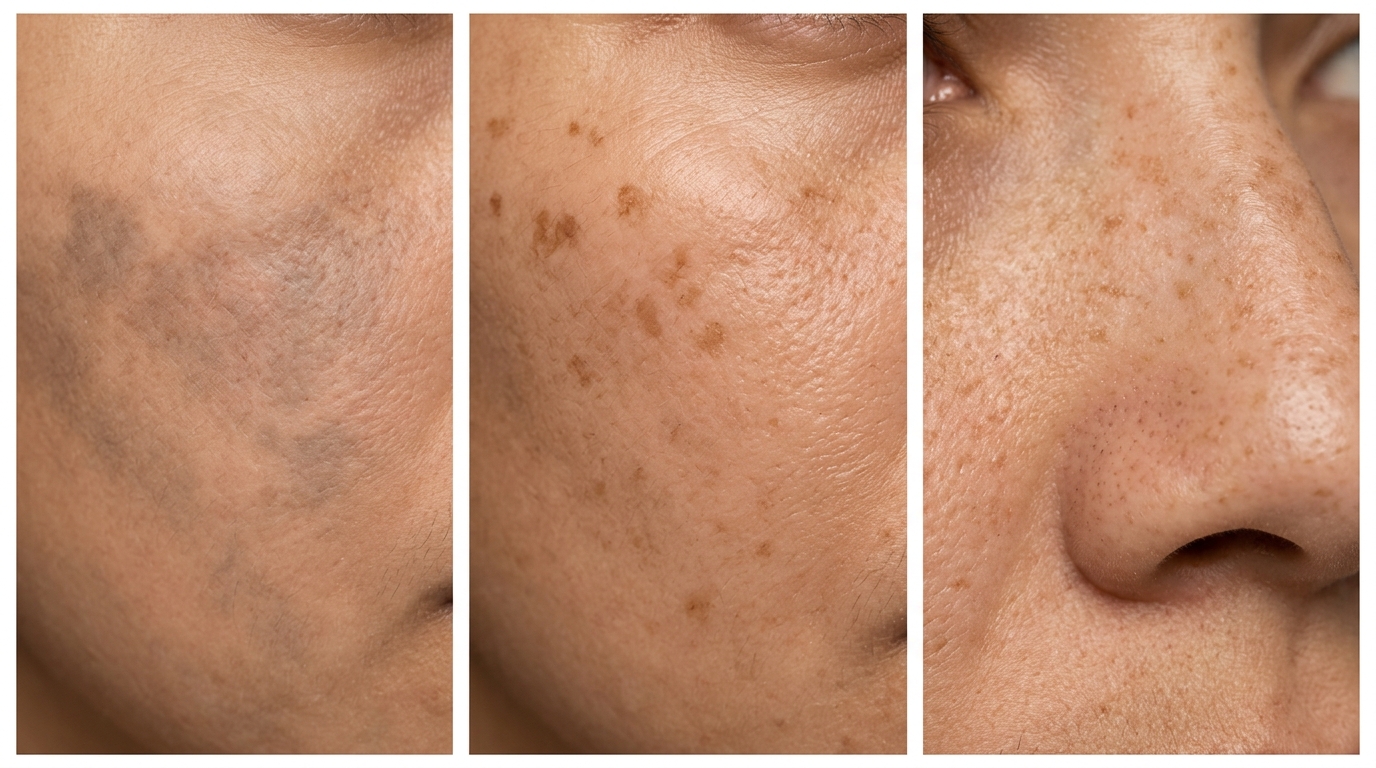
Types of facial pigmentation
Most faces carry a mix of two or three types. Skin tone matters as well. Deeper skin tones make pigment more easily after a pimple or a scratch, so marks tend to appear faster and last longer. This table helps you tell the types apart.
Type | What it looks like | Common trigger |
|---|---|---|
Melasma | Gray-brown patches on cheeks, forehead and upper lip | Hormones, sun and heat |
Sun spots | Small flat brown spots | Years of UV exposure |
Post-inflammatory hyperpigmentation | Dark marks where acne or irritation healed | Inflammation |
Freckles | Clusters of small light brown dots | Genes and sun |
Difference between melasma and hyperpigmentation
Hyperpigmentation is the umbrella term for any dark patch. Melasma is one type under that umbrella. It shows up on both sides of the face, returns easily and reacts badly to heat and harsh treatment. A sun spot is also hyperpigmentation, yet a few laser sessions often clear it.
Our guide to hyperpigmentation treatment in Dubai goes deeper on dark spot options.
Home care that works
Start with sunscreen
Every other step depends on it. The American Academy of Dermatology recommends sunscreen with SPF 30 or higher that is broad-spectrum and water-resistant. Used daily, it helps prevent new spots and can help clear existing ones.
A few habits suit life here. Use a generous amount on the face and neck. Reapply every 2 hours outdoors. Choose a tinted mineral formula with iron oxides if you have melasma, since it also blocks visible light. A wide-brim hat helps too.
Pigmentation removal cream and serums
Creams work slowly. Give any pigmentation removal cream 8 to 12 weeks before you judge it.
Ingredients with real evidence
- Vitamin C serum for dark spots: brightens tone. Use it in the morning under sunscreen.
- Niacinamide: calms skin and slows pigment transfer.
- Azelaic acid: helps acne marks and melasma.
- Retinoids: speed up cell turnover. Skip them during pregnancy.
- Kojic acid and alpha arbutin: gentle lighteners for mild spots.
- Hydroquinone and tranexamic acid: strong options that need a doctor’s supervision.
The best cream for pigmentation on face for women depends on the cause. A new mother with melasma needs a different plan than a woman with leftover acne marks. If you’re pregnant or breastfeeding, ask your doctor before you start any active ingredient.
Kitchen remedies to skip
Lemon juice irritates skin and can cause burns in sunlight that leave darker marks. Baking soda and toothpaste do similar damage. The AAD also warns that liquid bleach is harmful on skin. Aloe vera and green tea extract are gentle, yet the evidence for fading is thin.
So how to remove pigmentation from face naturally at home? Daily sunscreen and a gentle routine. Then patience. Overnight fixes are a myth. Pigment sits inside the skin and takes weeks to shift.
A simple morning and night routine
You don’t need 10 products. A short routine you follow every day beats a long one you abandon.
Morning: gentle cleanser, vitamin C serum, moisturizer, then sunscreen. Sunscreen always goes last.
Night: cleanser, then a treatment step such as azelaic acid or a retinoid (not both on the same night at the start), then a plain moisturizer.
Introduce 1 new product every 2 weeks. If your skin burns or turns red, stop and ask a doctor. Irritation itself creates more pigment, so a gentler routine often works faster than a strong one.
Clinical treatments for pigmentation
If home care stalls after 3 months, it’s time to see a doctor. Dr. Sima is a DHA-licensed general practitioner who starts with a skin assessment before recommending anything. Her pigmentation treatment in Dubai page lists the options in detail.
Treatment | Best for | Typical sessions | Downtime |
|---|---|---|---|
Laser | Sun spots and freckles | 3 to 5 | A few days of redness or flaking |
Chemical peel | Acne marks and dull tone | 3 to 6 | 2 to 5 days of peeling |
Medical skincare | Melasma and maintenance | Daily for months | None |
Regenerative add-ons | Acne scars with discoloration | 2 to 3 | Mild redness |
These are typical ranges. Your own plan depends on pigment depth and skin type.
Each route has trade-offs worth weighing before you book:
Route | Pros | Cons |
|---|---|---|
Creams and serums | Low cost and easy to start | Slow results and daily commitment |
Chemical peels | Quick visits and good for mild marks | Peeling and sun sensitivity afterward |
Laser | Strong results on sun spots | Needs careful settings and strict sun care |
Combined plan | Treats cause and marks together | More visits and a higher total cost |
Laser treatment for pigmentation
Lasers deliver energy that melanin absorbs. That breaks the pigment into tiny particles your body clears over the following days. Sun spots and freckles respond best. Melasma needs gentle settings because too much heat can bring it back darker.
Deeper skin tones need careful energy adjustment to avoid irritation or uneven results. So the best laser treatment for pigmentation on face in Dubai is the one set for your skin type and run by a doctor. You can read more about our laser skin rejuvenation treatment. Cooler months from October to April suit laser work because the sun is easier to avoid while you heal.
Chemical peel for pigmentation
A chemical peel uses glycolic, salicylic or mandelic acid to lift the top layer of skin. It suits acne marks and uneven tone. Strong peels carry more risk on deeper skin tones, so a series of superficial peels usually works better.
Regenerative support for scars and texture
When pigmentation comes with acne scarring, Dr. Sima may pair treatment with PRF therapy to speed up fading. Patients with dull or dehydrated skin sometimes add Salmon DNA. A skin booster adds hydration and improves texture while the skin recovers.
Best treatment for melasma on face
Melasma responds to a layered plan. A typical one has 4 parts:
- Strict daily protection with a tinted mineral sunscreen.
- A topical lightener such as azelaic acid or a doctor-prescribed formula.
- Light peels or low-energy laser sessions at gentle settings.
- Heat control through shade, cooler workouts and shorter sun sessions.
Some doctors add an oral medicine for stubborn cases. That needs a full medical history check first.
Expect control rather than a cure. Aggressive treatment is the most common reason melasma gets worse, so patience pays off here.
Flare-ups can still happen after a good result. A hot summer, a new hormonal medicine or a skipped week of sunscreen is often all it takes. When that happens, go back to the basics early. A quick restart with your doctor usually brings it back under control.
How long until you see results?
Timing depends on the method. Here’s a realistic guide.
Approach | First visible change | Full result |
|---|---|---|
Daily sunscreen plus cream | 4 to 6 weeks | 8 to 12 weeks or more |
Chemical peels | After 2 to 3 sessions | 2 to 4 months |
Laser for sun spots | 1 to 2 weeks after a session | 2 to 4 weeks per session |
Melasma plan | 6 to 8 weeks | 3 to 6 months |
What about a 7 day fix? You can soften dullness and redness in a week. Real fading takes longer. After laser, treated spots often darken first and flake off within 1 to 2 weeks. That’s normal.
What to expect at your first consultation
A good consultation takes time. Dr. Sima looks at your skin type, how deep the pigment sits and your medical history. She asks about medicines, pregnancy plans and your sun habits, because those shape the plan.
Treatment day follows a simple order:
- Skin analysis and a decision on the right method.
- Cleansing and, if needed, numbing cream or cooling gel.
- The treatment itself, which is usually quick.
- Cooling and soothing to calm the skin.
- Aftercare instructions on sunscreen and skincare for the next days.
Most people go straight back to work. Some sessions leave light redness that fades within hours.
Common mistakes that slow fading
Small habits can undo months of progress. These are the ones we see most:
- Skipping sunscreen on cloudy days or indoors near windows.
- Stacking several strong actives at once, which irritates skin and triggers more pigment.
- Scrubbing dark patches, which inflames them.
- Stopping treatment as soon as spots look lighter.
- Switching products every 2 weeks, so nothing gets a fair trial.
- Booking a laser session before a long beach holiday.
Pick a plan and give it time. Steady wins here.
How much does pigmentation treatment cost in Dubai?
Prices vary a lot between clinics. Four things move the number:
- The size of the area you want treated.
- The type and depth of your pigmentation.
- How many sessions you need.
- The technology used and the doctor’s experience.
Dr. Sima gives a clear cost breakdown after your consultation, once she has seen your skin. Ask what the quote covers. A fair quote names the number of sessions, the aftercare and any follow-up visits.
Pigmentation removal treatment side effects
Most side effects are mild and short. Expect redness, slight swelling, dryness and sensitivity for a few days. Treated spots may look darker for about a week before they flake away. Serious problems are uncommon when a trained doctor sets the treatment for your skin type.
The main risk is new pigmentation after treatment. It happens when skin meets strong sun too soon or the settings run too high for your skin tone. You lower the risk by:
- Choosing a doctor who treats your skin tone regularly.
- Avoiding sun for at least 2 weeks after a session.
- Pausing retinoids when your doctor tells you to.
- Telling your doctor about pregnancy or breastfeeding.
How to prevent pigmentation from coming back after treatment
Results last as long as you protect them. These habits matter most:
- Wear SPF 30 or higher every day and reapply outdoors.
- Stay in shade between 10am and 4pm when you can.
- Leave pimples alone. Picking creates dark marks.
- Use a vitamin C serum in the morning as a maintenance step.
- Limit long stretches in strong heat if you have melasma.
- Book a maintenance visit every 3 to 6 months if your pigmentation tends to return.
When to see a doctor
Get any new or changing spot checked before you treat it. Warning signs include uneven edges, several colors in one spot, a size over 6 mm, raised texture or bleeding. A dermatologist should examine those. Lasers should never go over a mole that hasn’t been cleared.
You should also book a visit if home care hasn’t helped after 3 months or if melasma keeps spreading. Bring a list of your current products and medicines to the appointment. It saves time and lets the doctor spot ingredients that may be irritating your skin.
FAQs
Yes, at different times of day. Use vitamin C in the morning and retinol at night. Introduce one product at a time so you can spot irritation early. If your skin stings or flakes, drop back to using each on alternate days.
It can be, with the right device and conservative settings. A doctor who treats deeper skin tones often will adjust energy carefully and may test a small area first.
Often it softens in the months after delivery or after you stop the hormone trigger. Some patches stay. Sunscreen helps whatever you decide to do next.
Not always. Creams and gentle peels can continue with strict sun care. Laser sessions are usually easier to plan between October and April.
Yes. Mineral makeup with SPF is a good choice. Wait until redness settles after a procedure and use clean brushes.
Evidence is limited. A balanced diet with plenty of fruit and vegetables supports healthy skin overall. Fading existing spots takes sun protection and treatment.
Quick Links
Certified Endolift Specialist
at Dynasty Clinic
Copyright © 2026 Dr. Sima . All Rights Reserved. Developed by Digital Marketing Agency in Dubai