
Lumps After Liposuction: Normal Swelling, Fibrosis, or Something Else?
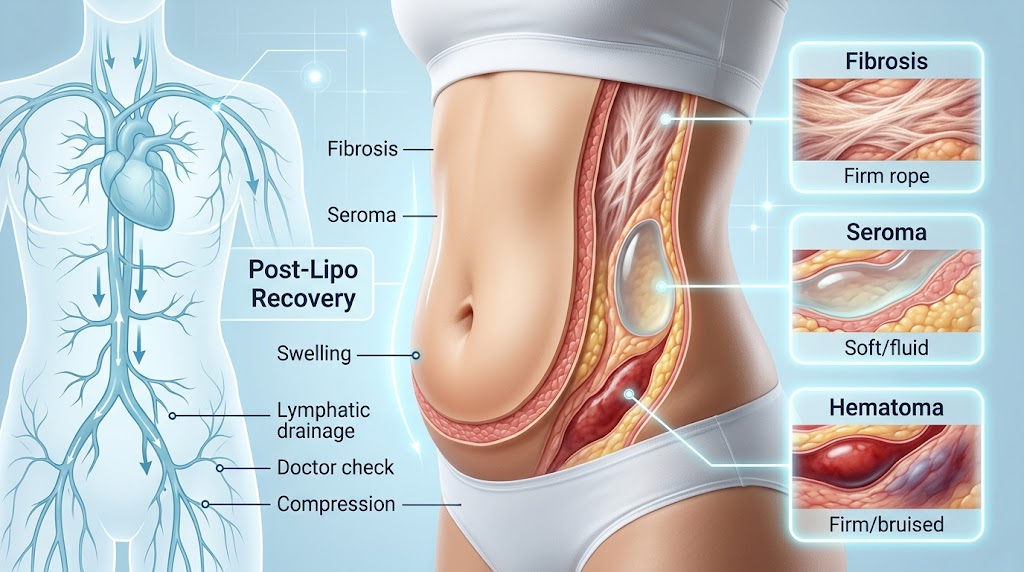
Lumps under the skin after liposuction are usually swelling, trapped fluid, or early scar tissue. Most soften over 3 to 6 months. See a doctor if a lump is hot, red, growing, or comes with a fever.
You look in the mirror a few weeks after surgery, and something feels off. Your tummy is bumpy. A few spots feel hard. The skin looks uneven when the light hits it. Lumps after liposuction worry almost every patient. The first question is always the same: is this normal? Usually it is. Sometimes it isn’t. This guide shows you how to tell the difference, what causes each type of lump, and what you can do about it at home or with a doctor.
Why lumps after liposuction happen
Liposuction removes fat through thin tubes called cannulas. The surgeon moves them back and forth under the skin to break up fat and suction it out. That’s a controlled injury. Your body treats it like one.
Three things happen at once. Fluid collects. Tissue swells. The fat layer that’s left behind heals unevenly. Together they make the surface feel bumpy for a while.
Swelling and trapped fluid
Swelling after liposuction is normal. The procedure disrupts your lymphatic system, the network that drains fluid out of your tissues. It can’t keep up for a few weeks.
Fluid pools in small pockets. Those pockets feel soft or doughy. They shift around and often look worse by evening.
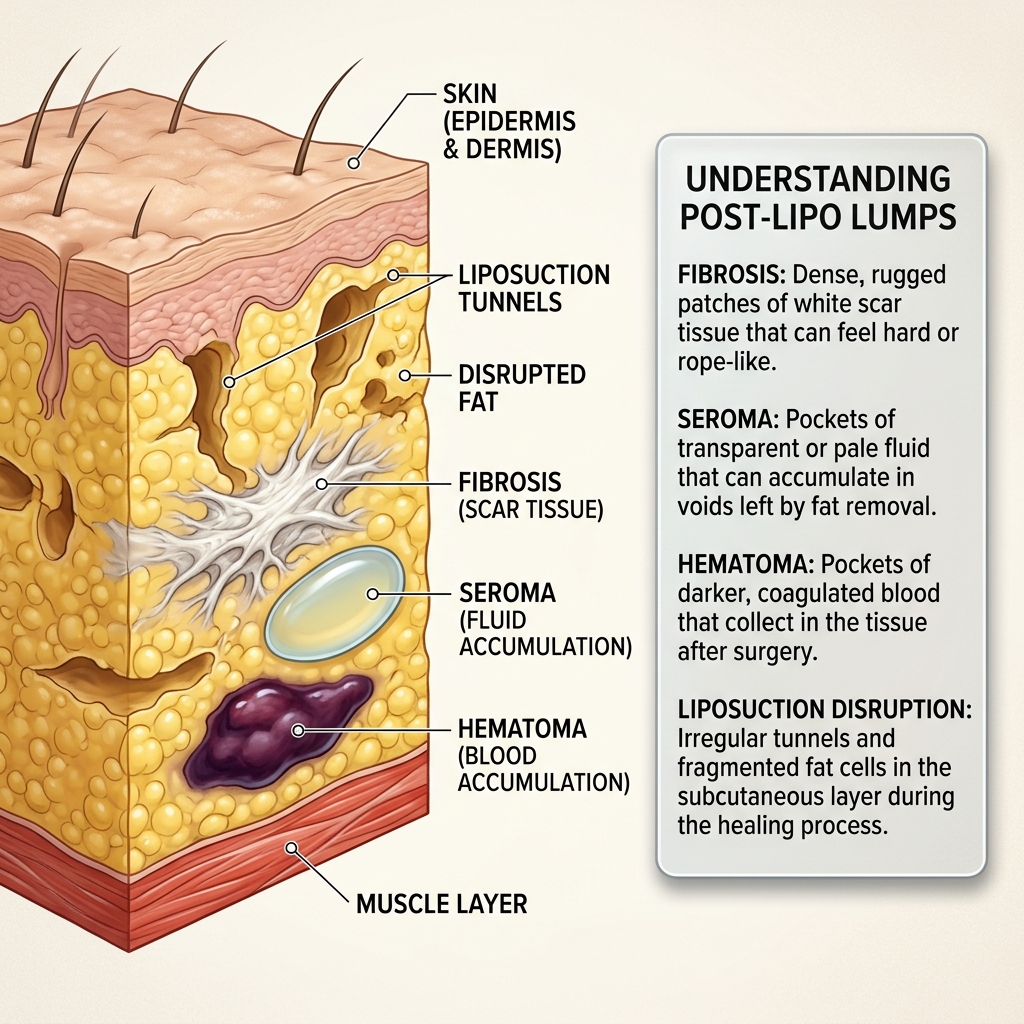
Uneven fat removal
No surgeon removes fat in a perfectly flat sheet. Some spots keep a little more fat. Others keep a little less. The skin follows whatever sits underneath. This is the main cause of uneven skin after liposuction. Swelling hides it at first. Once the puffiness drops, you see the real contour.
Healing tissue that thickens
Your body lays down collagen to repair every tunnel the cannula made. Sometimes it lays down too much. The result is firm, thick tissue that feels like a lump. That’s the start of fibrosis (more on it shortly).
Normal lumps vs lumps that need attention
Timing tells you more than anything else. This table shows a typical recovery. Yours may run faster or slower.
Time after surgery | What’s usual |
Weeks 1 to 2 | Peak swelling and bruising. Skin feels tight. Lumps are soft and doughy. |
Weeks 3 to 6 | Swelling falls. Patchy firm areas appear. Some tenderness |
Months 2 to 3 | Lumpiness is most visible. Fibrosis feels hardest here. |
Months 3 to 6 | Gradual softening. Skin texture smooths out. |
Months 6 to 12 | Final contour settles. |
Larger areas and bigger fat volumes usually take longer.
What normal post-liposuction swelling feels like
Normal swelling feels tight and a little tender. It spreads across the whole treated area instead of sitting in one spot. It’s worse after a long day and better after rest. Bruises fade from purple to green to yellow over 2 to 3 weeks.
Lumpiness after liposuction is most obvious around weeks 2 to 6. The early puffiness is gone, but the deeper tissue hasn’t settled. Many patients panic at this point. Most don’t need to.
Signs your lumps need a check
Call your surgeon or doctor if you notice any of these:
- A lump that’s hot, red, or getting more painful each day
- One side much more swollen than the other
- A soft pocket that sloshes like a water balloon
- Fever or chills
- Fluid or pus leaking from an incision
- A lump that grows week after week instead of shrinking
These infection point, a fluid collection, or bleeding. They need an exam. A home remedy won’t cut it.
When to get help right away
Chest pain, trouble breathing or a swollen, painful calf can signal a blood clot. Call emergency services. Don’t wait for a clinic appointment.
Fibrosis after liposuction
Fibrosis is an excess of scar tissue under the skin. Your body repairs the damage and overshoots. You end up with a firm or rubbery patch where soft fat used to be.
Scar tissue after liposuction is normal in small amounts. It becomes a problem when it’s thick enough to see or feel. Dr. Sima’s page on post-liposuction fibrosis explains how it’s assessed and treated.
What hard lumps after liposuction feel like
Fibrosis usually feels like:
- A firm plank or rope under the skin
- Skin that’s stiff and doesn’t pinch easily
- A pulling sensation when you stretch or twist
- Patches that are tender or numb
It’s rarely dangerous. It can be uncomfortable. It can also change how the area looks in fitted clothes.
Early fibrosis (weeks 3 to 8)
Still soft enough to respond to compression and gentle massage. This is the best window for home care.
Established fibrosis (after 3 months)
Harder and more stubborn. Home care alone often isn’t enough here. A medical assessment makes sense.
What raises your risk
Some factors make fibrosis more likely:
- A large volume of fat removed
- Several areas treated in one session
- Aggressive work close to the skin surface
- Skipping compression or wearing it badly
- Staying too inactive after surgery
- A personal tendency toward thick scarring
You can’t control all of these. You can control compression and movement.
Other causes of lumps under skin after liposuction
Not every firm lump is fibrosis. Three other causes are worth knowing.
Seroma after liposuction
A seroma is a pocket of clear fluid under the skin. It feels soft and smooth. It may slosh when you press it. It usually shows up in the first few weeks. Small seromas get reabsorbed. Large ones are drained with a needle by a doctor. Don’t try this at home.
Hematoma after liposuction
A hematoma is a collection of blood. It feels firm and often looks bruised. It’s usually more painful than a seroma. Small ones fade. Big ones sometimes need drainage. Sudden swelling with sharp pain in the first days deserves a same-day call to your surgeon.
Fat necrosis after liposuction
Fat necrosis happens when a patch of fat loses its blood supply and dies. The body walls it off. You feel a firm, round nodule and sometimes a small dimple in the skin above it. It’s usually harmless, but a doctor should confirm it. Some nodules shrink on their own. Others stay put and need treatment.
Quick comparison
Cause | What it feels like | Usual timing | See a doctor? |
Normal swelling | Soft, doughy, and tight | Weeks 1 to 6 | If one-sided or getting worse |
Fibrosis | Firm, rubbery, or hard | Week 3 onward | If it lasts past 3 months |
Seroma | Soft, smooth fluid pocket | First few weeks | If large or growing |
Hematoma | Firm, bruised, painful | First days to weeks | Promptly |
Fat necrosis | Firm, round nodule | Weeks to months | To confirm what it is |
How a doctor tells them apart
It starts with your history and a hands-on exam. The doctor checks how firm the lump is and whether it moves. They look at the skin colour and temperature.
Sometimes an ultrasound scan is needed. It shows whether a lump is fluid or solid tissue. That matters because the treatments are completely different.
How to get rid of lumps after liposuction
Most lumps respond to a few boring habits. Follow your surgeon’s instructions first. They know exactly what was done.
Wear your compression garment
Compression pushes fluid out and presses the skin flat against the tissue underneath. Many surgeons ask patients to wear it for several weeks. Wear it as directed. Check that it lies flat. Folds and rolls press ridges into the skin.
Ask about lymphatic drainage massage
A trained therapist uses light, slow strokes to move fluid toward your lymph nodes. Timing varies. Some surgeons clear it in the first 1 to 2 weeks. Others want you to wait longer. Ask before you book. Pressure that’s too deep can irritate fresh tissue.
Walk every day
Short walks keep blood and lymph moving. Start with 10 minutes and build up. Skip heavy workouts until you’re cleared.
Drink water and cut back on salt
Salt makes you hold fluid. Water helps your body flush it. Protein supports tissue repair. None of this is exciting. It still matters.
Give it time
Swelling can linger for 3 to 6 months. Final results take up to a year. Don’t judge your contour at week 4. Take a photo every 2 weeks in the same light. Progress is easier to see in photos than in the mirror.
Lumps by body area
Stomach and flanks
The abdomen is the area patients ask about most. The skin moves with every breath and bend. Garments shift. Tummy fibrosis often feels like a hard band above or below the navel.
Thighs and hips
Gravity pulls fluid downward. Swelling in the legs often lingers longer and looks worse at night. Resting with your legs raised can help.
When home care isn’t enough
If a lump hasn’t softened by month 3 to 6 (or hurts earlier than that) a clinic can step in. The right option depends on the cause. A good plan starts with an exam to confirm what you actually have.
Non-surgical softening treatments
Doctors use devices such as therapeutic ultrasound or radiofrequency to warm and soften scar tissue. Some use injections in firm areas. Results vary from person to person.
PB serum for fibrosis
Dr. Sima uses PB serum for fibrosis as a non-surgical option for firm areas after liposuction. She examines the area first. The plan depends on how hard the tissue is and how long it’s been there.
Endolift for the tummy
Some patients are left with small pockets of stubborn fat or mild laxity. Endolift for the tummy is a minimally invasive laser treatment. It can refine the contour without a second operation.
Skin tightening
If loose skin makes the area look uneven, XERF skin tightening may help firm it up. Results depend on how much laxity there is.
Revision surgery
Surgery is the last option. Surgeons usually wait 6 to 12 months so the tissue can settle. Revising too early can make things worse. That decision belongs to a plastic surgeon. Dr. Sima’s treatments are non-surgical.
Is it cellulite or lumpiness?
Many patients mix the two up. Cellulite is dimpling caused by fibrous bands that pull the skin down. It was probably there before surgery. Liposuction removes fat. It doesn’t release those bands. Cleveland Clinic’s liposuction overview says as much.
Mistakes that make lumps worse
- Massaging hard before you’re cleared: Deep pressure on fresh tissue can add inflammation.
- Wearing a garment that bunches: Folds leave ridges.
- Jumping back into heavy workouts: Wait for the green light.
- Smoking or vaping: Both slow healing.
- Squeezing or poking lumps: It irritates the tissue.
- Using unlicensed providers for “quick fixes” Aggressive treatments in the wrong hands cause new problems.
- Ignoring warning signs: Fever or spreading redness can’t wait.
Lowering your risk before surgery
You can’t remove the risk completely. You can reduce it.
- Choose a surgeon with plenty of liposuction experience. Ask to see results for your body type.
- Keep your weight stable for months before surgery.
- Stop smoking well ahead of the date.
- Set realistic expectations. Liposuction contours the body. It isn’t a skin-smoothing procedure.
- Plan your aftercare. Book the garment fitting and any massage sessions before you go in.
Questions to ask your doctor
Bring these to your next appointment:
- Is this swelling, fluid, or scar tissue?
- When should I start lymphatic massage?
- How long should I wear compression?
- What would make you worry about this lump?
- When is it too early to treat it?
- Who do I call if it gets worse after hours?
Lumps after liposuction in Dubai: what local patients should know
Climate and travel change recovery here.
Heat: Summer heat and humidity make swelling feel worse. Compression garments get harder to tolerate. Stay in cool spaces and drink water throughout the day.
Travel: Some patients fly in for surgery and head home within days. Flying soon after surgery can raise clot risk and make follow-up harder. Ask your surgeon how long to stay and who will check you if lumps appear after you leave.
Licensing: Any doctor treating you should hold a Dubai Health Authority license. Dr. Sima Khaiyati is a DHA-licensed doctor who treats post-liposuction fibrosis and other aesthetic concerns.
Final thoughts on lumps after liposuction
Lumps after liposuction are common. Most come from swelling, fluid, or early healing tissue. They soften over 3 to 6 months. Fibrosis is the main exception. It feels firm and can stay put without help. A seroma, hematoma, or fat necrosis needs a doctor’s eyes.
Here’s the short version of what to do. Wear your garment. Walk daily. Ask about lymphatic massage. Take photos. Get checked fast if a lump turns hot, red, or painful, or if a fever shows up.
FAQs
Yes. Fibrosis and fat necrosis often show up 1 to 3 months after surgery. A few appear later. Any new lump after the first few months deserves an exam.
Mild asymmetry is common because swelling rarely clears evenly. A big difference deserves a check. That goes double if one side is warm, red, or painful.
Gentle lymphatic massage helps with swelling and soft lumps. Hard fibrotic tissue rarely responds to home massage. Deep or aggressive pressure can irritate healing tissue. Ask your surgeon before you start.
Not necessarily. Lumps happen even with skilled surgeons because healing varies. Technique matters. So do your biology and aftercare. If lumps persist after a year, get a second opinion.
It can. The fat cells that remain can grow, and the uneven layer shows more. A stable weight keeps your contour predictable.
Light walking is fine early on. Add more as your surgeon allows. Avoid high-impact moves and heavy lifting until you're cleared. Pain over a lump is a reason to stop.
Quick Links
Certified Endolift Specialist
at Dynasty Clinic
Copyright © 2026 Dr. Sima . All Rights Reserved. Developed by Digital Marketing Agency in Dubai