
Melasma Treatment in Dubai: Why It Returns and What Works

You finally cleared the dark patches, and then summer hit and they crept back. If that sounds familiar, you’re not doing anything wrong. Melasma is stubborn, and the UAE sun makes it worse. This guide explains why it keeps returning and which options actually help. It also covers how to choose the right melasma treatment Dubai clinics can offer, so you don’t waste months on the wrong plan.
What Melasma Actually Is
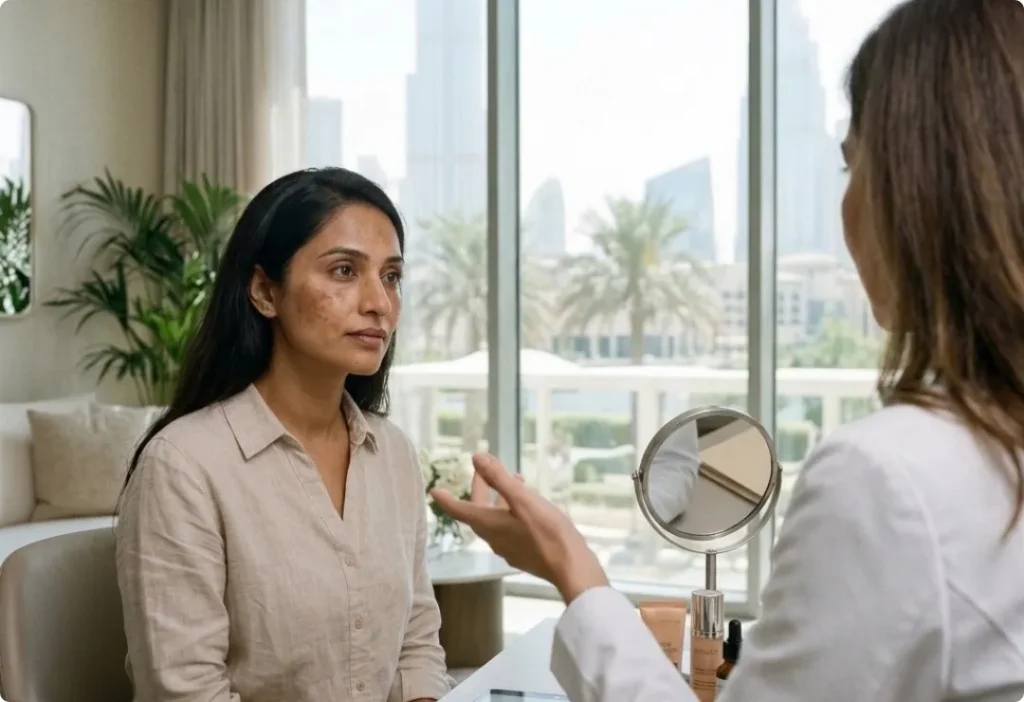
Melasma is a common skin problem that causes brown to gray-brown patches on the face. It shows up most often on the cheeks, the bridge of the nose, the forehead, the chin and above the upper lip. It doesn’t hurt or itch, but plenty of people feel self-conscious about it.
What It Looks Like
The patches are usually symmetrical, and they can look like freckles that have joined up into a bigger blotch. The color depends on your skin tone and how severe the melasma is. On darker skin it can look bluish gray.
Who Gets It
Women get melasma far more often than men, and only about 10% of people with melasma are men. It also runs in families. Women with medium to dark skin tones are the most likely to develop it, which covers a large share of people living in Dubai. The American Academy of Dermatology has a helpful overview of melasma if you want to read more.
Why Melasma Returns (and Why It’s So Frustrating)
Melasma has no permanent cure. It comes back so often that some dermatologists advise never stopping treatment completely once your skin clears. That sounds grim, but it gets easier to manage once you know what wakes the pigment up again.
Sun and Visible Light
UV rays are the big trigger, and even a small amount of sun can bring melasma back after it has faded. But UV isn’t the whole story. Visible light, the kind you can see, can darken melasma too, and a regular sunscreen may not block it.
Heat
Dubai summers are brutal, and heat itself seems to play a part. Heat and hormonal changes can both drive recurrence. That’s one reason patches often look darker in July than in January, and many people say their melasma is more noticeable in summer and fades in winter.
Hormones
Pregnancy, birth control pills and hormone replacement medicine can all trigger melasma. If you start or stop one of those, your patches may shift. Please talk to your doctor before changing any medication, and don’t do it just for your skin.
Irritation
This one surprises people. Harsh scrubs and strong acids can make melasma darker, and some melasma treatments can irritate darker skin and make the patches worse. More aggressive doesn’t mean better here. With melasma it often means worse.
The Rebound Problem
Some treatments clear pigment quickly, and then it bounces back darker. This is called rebound hyperpigmentation, and it’s the main reason a slow plan usually beats a quick fix.
Trigger | How it brings melasma back | What helps |
UV and visible light | Wakes up pigment cells | Tinted mineral sunscreen every day |
Heat | Fuels pigment production | Shade, cooler routines, midday breaks |
Hormones | Shifts pigment activity | Doctor review of medications |
Irritation | Triggers inflammation | Gentle products and a patch test |
Melasma Treatment Dubai: What Works
No single product fixes everything. Good plans stack a few things together and run for months. Dermatologists recommend treating melasma sooner rather than later, because it’s harder to get a noticeable result after many years.
Sun Protection Comes First
Every plan starts here. Dermatologists recommend daily sunscreen and a wide-brimmed hat. For melasma I’d go one step further and choose a tinted sunscreen, because tinted products with more than 3% iron oxide block visible light and zinc oxide alone doesn’t. Reapply every 2 hours when you’re outside, and yes, that includes time in the car.
Creams and Serums
Dermatologists still describe hydroquinone as the gold standard for melasma. It lightens the skin and is usually used in cycles. Other options include azelaic acid and vitamin C, and kojic acid is sometimes used as a second choice. These should go through a doctor, since the wrong strength can irritate your skin.
Oral Tranexamic Acid
This is a tablet that some doctors prescribe for stubborn cases. It’s used off-label for melasma, because the drug is officially approved for heavy periods. It isn’t right for everyone, and anyone with a clotting history shouldn’t take it, so you need a proper medical check first.
Chemical Peels
Light peels can help a little, but they take several sessions and the results are usually modest. Deep peels are riskier on melasma-prone skin, so I’d avoid them.
Lasers
Lasers get the most attention and cause the most confusion. Newer lasers show some promise, but there are reports of hypopigmentation and rebound hyperpigmentation, so the settings and your skin type matter a lot. If a clinic promises a one-session laser cure for melasma, walk away. You can look at Dr. Sima’s pigmentation treatment page to see how the clinic approaches uneven tone, and her laser skin rejuvenation page covers skin quality work.
Technology Matters Less Than the Plan
A good device in the wrong hands still causes trouble. The Hollywood Spectra Laser page explains one of the lasers available at the clinic. During your consultation, ask whether it suits your skin and your pigment type.
Skin Boosters and Exosomes
Some clinics add skin boosters or exosome therapy to improve skin quality. The evidence for melasma specifically looks thin to me. They might support healthy skin, but don’t expect them to replace the basics.
Option | What it does | Main downside | Usual timeline |
Tinted sunscreen | Blocks UV and visible light | Needs daily effort | Ongoing |
Hydroquinone and other creams | Slow pigment production | Can irritate | 2 to 4 months |
Tranexamic acid | Calms pigment activity | Needs a medical screen | Several months |
Light peels | Lift surface pigment | Modest results | Multiple sessions |
Lasers | Break up pigment | Rebound risk | Course of sessions |
Best Melasma Treatment Dubai: How to Choose a Clinic
Dubai has hundreds of clinics, and choosing one can feel like a coin toss. Here’s what I’d look for.
Questions Worth Asking
Start by asking whether the doctor is DHA-licensed and whether she will personally treat you. Ask what the plan is if your melasma darkens, how the clinic protects darker skin, and what the maintenance plan looks like. A good answer is specific, and a vague answer is a bad sign.
Red Flags
Be careful with any clinic that promises permanent removal or skips the skin assessment before treatment. Using the same laser setting for every patient is another warning sign, as is pressure to buy a big package on day one. Dr. Sima is a DHA-licensed general practitioner who begins with an assessment of your skin.
Melasma Treatment Cost Dubai: What Moves the Price
I can’t give you one number, because there isn’t one. The price depends on how large and deep the pigment is, which treatments make up your plan, how many sessions you need, and whether you need prescription products. Ask for a written plan with a price range, and a good clinic will be happy to give you one after the consultation. The cheapest option rarely stays cheap, because a bad laser session can leave you paying to fix new pigment.
What a Realistic Timeline Looks Like
Most people want results in two weeks, but melasma doesn’t work like that. In weeks 1 to 4 you set up sun protection and a gentle routine, and not much changes yet. In months 2 to 3 the patches usually start to lighten if you’re consistent, and by months 4 to 6 many people see a bigger improvement. After that you move to maintenance, which is a bit boring but keeps your results. Your timeline might differ, since deeper pigment tends to move more slowly.
A Daily Routine That Keeps Melasma Away
Start by washing with a gentle cleanser, then apply any serum your doctor recommended. Finish with a tinted mineral sunscreen at SPF 50, and wear a hat and sunglasses when you’re outside. Reapply sunscreen every 2 hours, and skip harsh scrubs and strong acids. It’s simple, and it works.
Mistakes That Bring Melasma Back
The most common mistake is skipping sunscreen on cloudy days, because UV still gets through. Many people also stop treatment as soon as their skin clears, but maintenance matters. Aggressive treatments can darken patches with extra heat and irritation, and DIY lightening creams from unknown sources sometimes contain unsafe ingredients. Finally, don’t forget your windows, because light comes through glass.
The Bottom Line
Melasma comes back because the triggers keep coming back, and in the UAE sun and heat sit at the top of that list. The best melasma treatment Dubai has to offer is a slow plan that starts with sun protection and adds treatments one at a time. Be wary of fast promises. If you want a plan built around your skin, Dr. Sima can assess your pigment and walk you through your options. Call +971 55 505 1679 to book a consultation.
FAQs
Not in the permanent sense. You can fade it a lot and keep it quiet for years, but it can return when the triggers come back.
No. Sun spots are usually small and sharp-edged, while melasma forms larger symmetrical patches. A doctor can tell them apart, which matters because they’re treated differently.
Wait if you can. The American Academy of Dermatology advises waiting until after the baby arrives, because it’s hard to know whether over-the-counter products are safe in pregnancy, and melasma often improves after birth.
Yes. It’s less common, but it happens, and the treatment approach is similar.
Often it does, since less sun and less heat usually mean paler patches. Don’t drop your sunscreen though, because the pigment is only resting.
It’s usually used in cycles under medical supervision. Ask your doctor how long to stay on it and what to do afterward.
Quick Links
Certified Endolift Specialist
at Dynasty Clinic
Copyright © 2026 Dr. Sima . All Rights Reserved. Developed by Digital Marketing Agency in Dubai