
Plasma Gel vs. Hyaluronic Acid: Medical Guide
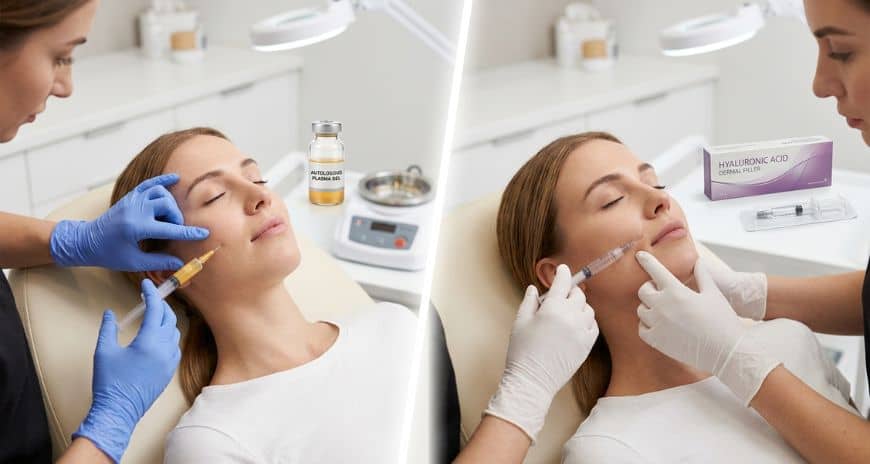
Plasma gel and hyaluronic acid are two terms that get mixed up often. They’re not the same thing, and they’re not used for the same reasons.
This guide breaks down plasma gel vs hyaluronic acid in plain terms, before you book a consultation. It’s written for anyone weighing their options, not to sell you on one treatment over another. Think of it as the conversation you’d have in a doctor’s office, just in writing.
Plasma Gel vs. Hyaluronic Acid: The Core Difference
The Short Version
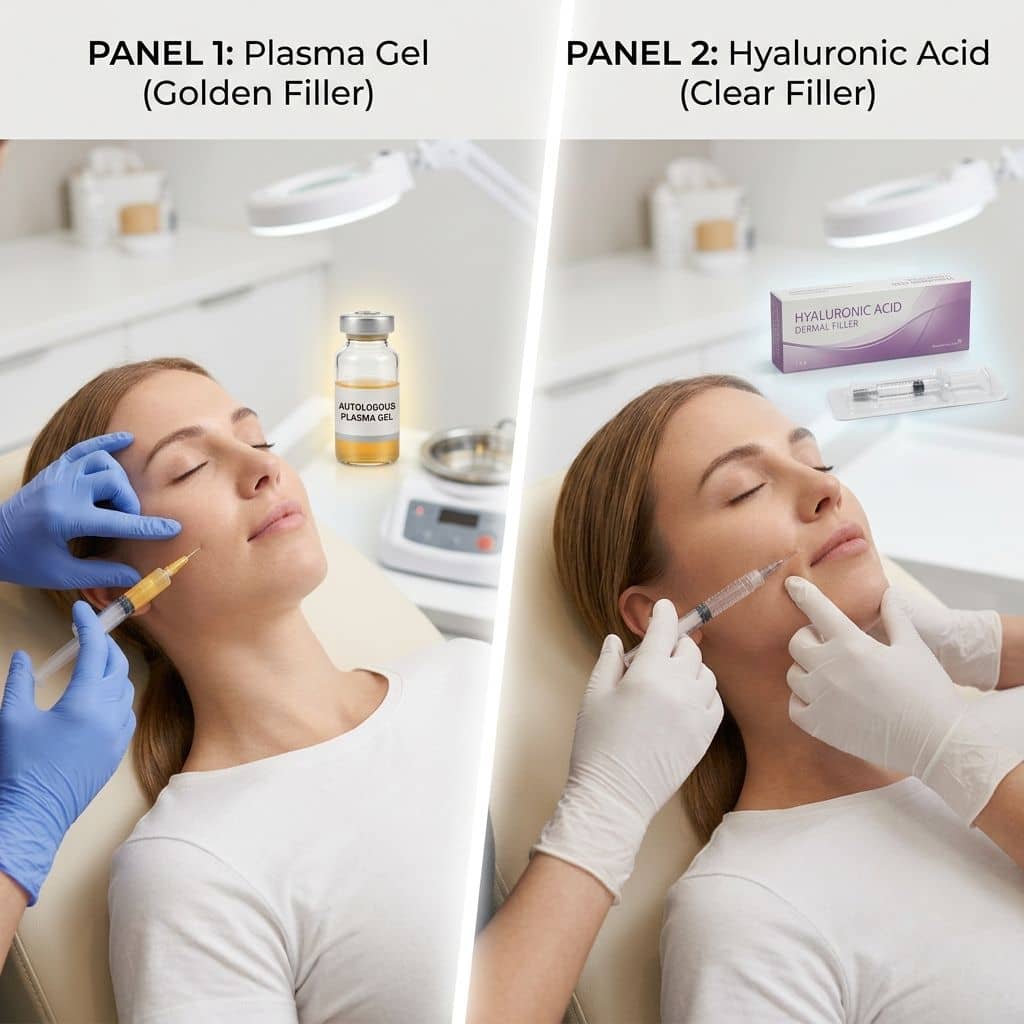
Plasma gel comes from your own blood. Hyaluronic acid fillers are made from a lab-produced or biofermented gel. Both can add volume. However, they work through different mechanisms and suit different goals.
At a Glance
| Feature | Plasma Gel | Hyaluronic Acid Filler |
|---|---|---|
| Composition | Your own blood plasma, heat-processed into a gel | Cross-linked hyaluronic acid molecules |
| Source | Autologous (from the patient) | Synthetic or biofermented, not from the patient |
| Typical use case | Larger-volume contouring (e.g., buttocks, hips) | Facial volume, fine lines, targeted contouring |
| Longevity | Generally shorter-lived, varies by individual | Generally longer-lived, often months to over a year |
| Reversibility | Not reversible once injected | Can often be dissolved with an enzyme (hyaluronidase) |
| Regulatory status | Varies by country; not classified or approved everywhere in the same way | Widely regulated and approved as a medical device in most jurisdictions |
The “better” choice depends on your goal and the area you’re treating. We’ll come back to that in the decision section below.
What Is Hyaluronic Acid? What Is It Made Of?
Hyaluronic acid is a naturally occurring sugar molecule, technically a glycosaminoglycan, that your body already produces to keep skin, joints, and connective tissue hydrated. In dermatology, it’s widely recognized as one of the most effective humectants available. In other words, it draws and holds water in the tissue it’s applied to.
Composition and Structure
Hyaluronic acid is made of repeating sugar units that form a long chain. This chain can bind many times its weight in water, which is why it plumps skin and cushions joints so effectively. In injectable fillers, manufacturers cross-link these chains, creating a gel that’s firmer and longer-lasting than the HA your body produces naturally.
Where It’s Found in the Body
You’ll find hyaluronic acid throughout the body, with particularly high concentrations in the skin, the fluid around joints, and the eyes. Because it’s a substance your body already recognizes, HA fillers are generally considered biocompatible when the product is medical-grade and applied correctly. That said, “biocompatible” doesn’t mean risk-free. Outcomes still depend heavily on the practitioner and the product used.
What Is Plasma Gel?
Quick Definition
Plasma gel is derived from a small sample of your own blood. The plasma, the liquid portion that carries platelets and growth factors, is separated out, then heat-treated to change its consistency into a soft, moldable gel.
Why It’s Different
Because it comes from the patient’s own body, plasma gel is classified as an autologous material. Some clinics highlight this as a lower-allergy-risk option compared with synthetic fillers.
What It’s Typically Used For
Plasma gel is most often discussed in the context of larger-volume, non-surgical body contouring, such as buttock augmentation, rather than fine facial detailing. It’s a newer treatment category than hyaluronic acid fillers, and the research base behind it is still developing. For that reason, it’s worth being cautious with any provider who presents it as a fully established, long-track-record procedure.
Is Buttock Augmentation Dangerous With Plasma Gel Fillers?
The Direct Answer
Buttock augmentation with plasma gel carries real risks. Those risks rise sharply when the procedure isn’t performed by a qualified, licensed practitioner in a proper clinical setting. This isn’t unique to plasma gel; it’s true of most volumizing injectable procedures. However, the scale of product used in body contouring makes technique and product quality especially important.
The Main Risk Factors
- Unlicensed injectors. Procedures performed outside a licensed medical setting remove the safety checks that catch problems early.
- Non-medical-grade product. Plasma gel or filler that hasn’t been prepared under sterile, regulated conditions carries a higher risk of contamination or unpredictable results.
- Incorrect injection technique or plane. Volume injected into the wrong tissue layer, or too close to blood vessels, increases complication risk.
- Vascular occlusion or embolism risk. This is one of the more serious complications associated with large-volume filler injections, particularly in the gluteal region. It’s a key reason technique and anatomical knowledge matter so much.
- Infection. As with any injection-based procedure, non-sterile conditions raise the risk of infection at the injection site.
How a Proper Clinical Protocol Reduces Risk
In a proper clinical setting, these risks are reduced through careful patient screening, sterile technique, and correct anatomical knowledge of the injection plane. The product itself should be sourced and prepared under medical-grade conditions.
No injectable procedure can be called risk-free, and any provider who claims otherwise should raise a flag. What a qualified practitioner can offer is a controlled, monitored environment where risks are identified and managed, not ignored.
What Is a Hyaluronic Serum?
Quick Definition
A hyaluronic serum is a topical skincare product containing hyaluronic acid, designed to be applied to the surface of the skin rather than injected.
How It Differs From Injectable HA
An injectable filler adds structural volume beneath the skin. A serum works differently: it draws moisture into the skin’s outer layers, which can temporarily improve plumpness and reduce the look of fine dryness lines. Because the molecules in most serums are too large to penetrate deep into the skin, the hydration effect is largely surface-level.
Who It’s For and How It’s Used
HA serums suit anyone who wants a daily hydration boost, rather than a way to replace lost volume. They’re generally suitable for most skin types, including sensitive skin, and are commonly layered into both morning and evening routines.
Can You Use Niacinamide With Hyaluronic Acid and Vitamin C?
The Direct Answer
Yes. Niacinamide, hyaluronic acid, and vitamin C can generally be used together, and many skincare routines are built around this combination. The main thing to get right isn’t whether they’re compatible, but the order and timing you apply them in.
Layering Order and Timing
- Morning: Vitamin C first, for its antioxidant support during the day, followed by a hyaluronic acid serum to lock in hydration, then a moisturizer.
- Evening (or a separate step): Niacinamide often works better here, partly because vitamin C performs best at a lower pH while some niacinamide formulations are more stable at a higher pH.
- General rule: Apply products from thinnest to thickest consistency, so each one absorbs properly.
A Note on Compatibility
If your specific products cause irritation when layered, that’s often about formulation and concentration, not the ingredients being fundamentally incompatible. A patch test, or a quick check with your dermatologist or aesthetic practitioner, can help you build a routine that works for your skin.
Which One Is Right for You?
If Your Concern Is Facial Volume or Skin Hydration
Hyaluronic acid, whether as an injectable filler or a topical serum, is likely the more established, better-researched option.
If Your Concern Is Larger-Scale Body Contouring
Plasma gel may come up as an option worth discussing for buttock or hip volume, alongside other established alternatives.
Why This Still Needs a Consultation
Neither answer is complete without a proper in-person assessment. Your skin, your anatomy, and your goals all factor into which approach makes sense. A good consultation should feel like a conversation, not a sales pitch.
Dr. Sima Khaiyati brings hands-on aesthetic medicine experience to these conversations. A consultation at her Dubai clinic typically starts with a straightforward discussion of your concerns, a look at your skin or treatment area, and a walkthrough of what’s realistic, before any decision is made about which approach fits you best. If you’re trying to decide between plasma gel and hyaluronic acid, that’s exactly the kind of question worth bringing to a consultation rather than settling online.
FAQs
It carries real risk, particularly when performed by unlicensed injectors using non-medical-grade product. In a proper clinical setting, with correct technique and sterile conditions, that risk is reduced but never fully eliminated. Choosing a licensed, experienced practitioner is the single biggest factor in safety.
Hyaluronic acid is a naturally occurring sugar molecule that binds water in skin, joints, and connective tissue. It's made of repeating chains of sugar units, and your body produces it naturally, particularly in the skin and the fluid around joints.
A hyaluronic serum is a topical skincare product that draws moisture into the outer layers of skin. Unlike injectable hyaluronic acid, it doesn't add structural volume; it primarily hydrates the skin's surface.
Generally, yes. Most routines apply vitamin C and hyaluronic acid together, often in the morning, while niacinamide can be used in a separate step to account for pH differences. If irritation occurs, it's usually about formulation rather than the ingredients being incompatible.
Quick Links
Certified Endolift Specialist
at Dynasty Clinic
Copyright © 2026 Dr. Sima . All Rights Reserved. Developed by Digital Marketing Agency in Dubai