
Postpartum Hair Loss: Causes, Recovery Timeline, and Treatments
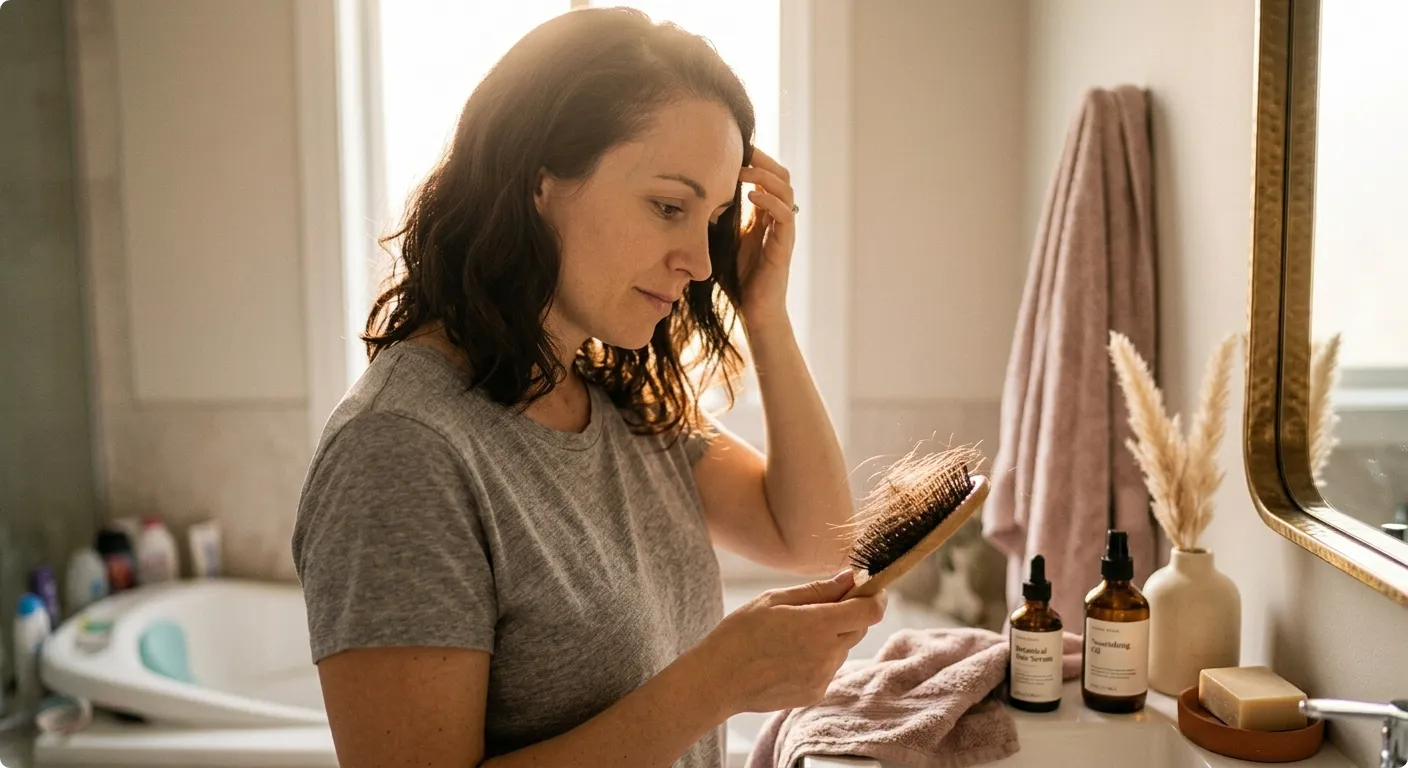
Your body goes through changes during pregnancy and your hair changes too. You may have noticed that your hair became thicker and fuller while pregnant and then one day you started losing a lot of hair. When you see hair strands in clumps in your brush or around the shower drain it can feel very alarming.. Postpartum hair loss is usually temporary and the hormones that were active during pregnancy are the cause.
Most women experience shedding a months after giving birth and then they start to see positive changes as the hair cycle goes back to normal. However if the shedding seems to be ongoing or very heavy it is an idea to have a careful look, by a professional because there might be another underlying condition.
With an understanding of the causes of postpartum hair loss the length of the condition and the treatment options that exist the recovery process feels much less daunting.
What Is Postpartum Hair Loss?
Postpartum hair loss simply means that you lose hair after you have given birth than you usually lose. Doctors normally describe this type of shedding as telogen effluvium. It is a condition that can occur when your body goes through physical or hormonal stress, such as pregnancy and childbirth.
During pregnancy your estrogen levels were higher so more of your hair was in the growth phase. That means your hair was likely thicker, than usual. After you delivered, your estrogen. Many hairs enter the resting phase at once. When those hairs later fall out the shedding can seem sudden and very dramatic.
You may notice:
- More hair on your pillow or clothes
- Increased shedding while you wash your hair
- Hair collecting around the shower drain
- A thinner-looking ponytail
- Reduced fullness around your temples
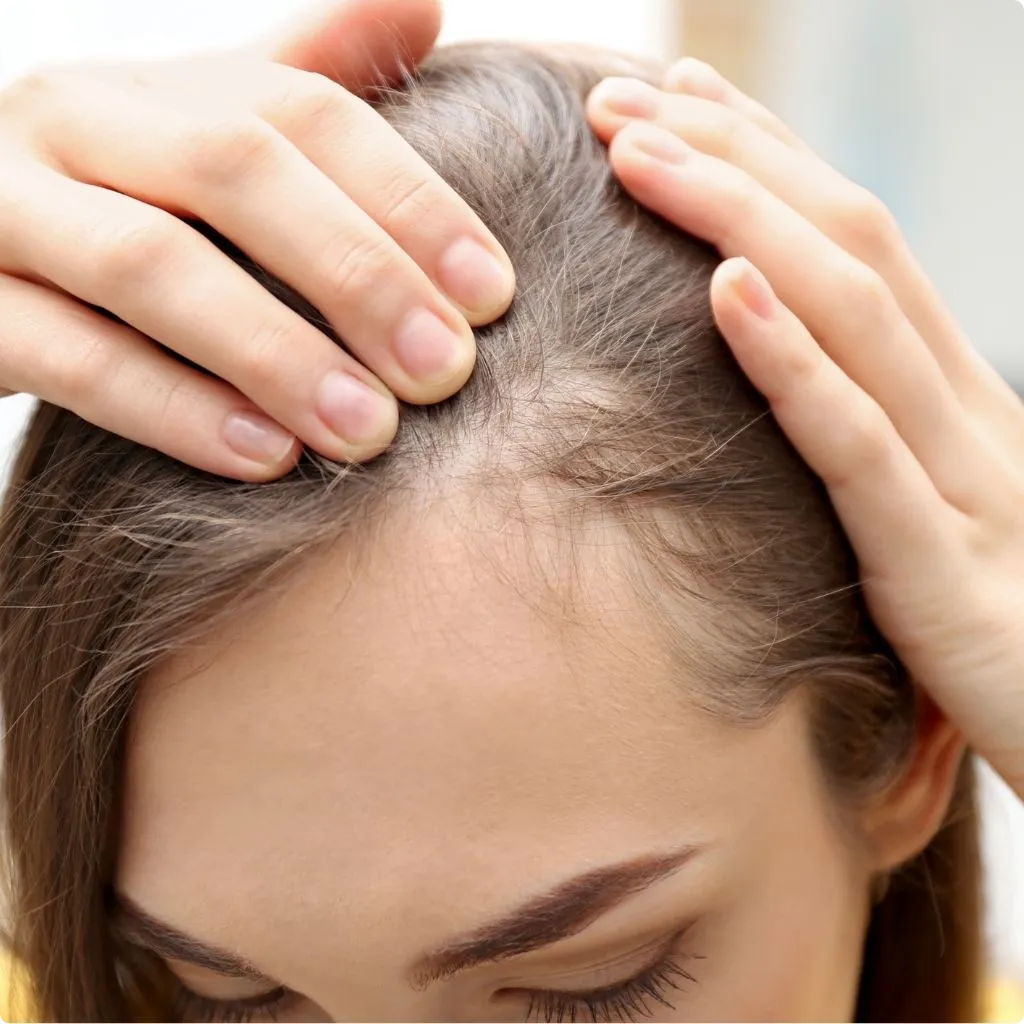
- More visible scalp in areas that already had fine hair
Here’s the good news: postpartum shedding usually does not mean your follicles have stopped producing hair for good.
Why Does Hair Fall Out After Pregnancy?
Hormonal changes play the biggest role in postpartum shedding. When your estrogen drops after childbirth, it pushes a larger number of hairs into the resting and shedding phase all at once.
However, hormones are not always the only factor at work.
As a new mother, you may also deal with:
- Physical stress from pregnancy and childbirth
- Poor sleep
- Changes in your eating habits
- Rapid weight loss
- Low iron levels
- Nutritional deficiencies
- Thyroid problems
- Emotional stress
- Existing female pattern hair loss
These factors can sometimes prolong your shedding or make it feel more noticeable than it should be.
Research also suggests that postpartum telogen effluvium can reveal another underlying hair-loss condition, such as female pattern hair loss or traction alopecia. That is why you should not automatically blame every case of persistent hair loss on pregnancy alone.
When Does Postpartum Hair Loss Start?
You will likely notice postpartum hair loss two to five months after childbirth. Some women see it earlier, while others notice more significant shedding later on.
Your shedding may feel especially dramatic around the third or fourth month after delivery. In fact, the American Academy of Dermatology notes that excessive shedding often peaks around four months after giving birth.
This timing can catch you off guard. You might feel fully recovered from childbirth when your hair suddenly starts falling out more than usual.
In most cases, though, the shedding gradually settles down as your hair growth cycle normalizes.
Postpartum Hair Loss Recovery Timeline
Every woman recovers at her own pace, but this general timeline can help you know what to expect.
0–3 Months After Delivery
Your hair may still look fairly normal during these first few months. You might notice only mild shedding during this stage.
3–4 Months
Your shedding often becomes more noticeable around this point. You may see significantly more hair while brushing, washing, or styling.
4–6 Months
This period can bring some of the heaviest shedding you will experience. At the same time, you may start to see short new hairs growing along your hairline and temples.
6–9 Months
Your shedding usually begins to slow down, and you should find it easier to notice gradual regrowth.
9–12 Months
Many women regain much of their normal hair fullness by their baby’s first birthday. That said, your exact recovery time will depend on your body.
If your hair has not started returning to its normal fullness within about a year, consider seeing a dermatologist, since another condition may be contributing to the continued loss.
How Can You Reduce Postpartum Hair Shedding?
You cannot fully stop postpartum shedding, since hormonal changes drive this natural shift in your hair cycle. Even so, you can protect your hair and support healthy regrowth in several ways.
Choose Gentle Hair Care
Avoid brushing too often, drying your hair aggressively with a towel, or wearing hairstyles that pull tightly on your scalp. Frequent tension can contribute to traction-related hair loss.
Use a gentle shampoo and a lightweight conditioner. If your hair looks thinner during the shedding phase, you can also switch to volumizing products.
Eat a Balanced Diet
Your body needs enough nutrients to support normal hair growth. Try to include protein-rich foods, vegetables, fruits, whole grains, and healthy fats in your daily meals.
If you suspect you have an iron, vitamin, or other nutritional deficiency, speak with a healthcare professional before you start taking supplements.
Avoid Excessive Heat and Chemical Treatments
Frequent straightening, high heat styling, bleaching, and harsh chemical treatments can weaken your hair shaft. If you cut back on these treatments, you can minimize breakage while your hair recovers.
Handle Wet Hair Carefully
Wet hair breaks more easily than dry hair. Use a wide-tooth comb, and avoid brushing your hair aggressively right after you wash it.
When Should You See a Doctor About Postpartum Hair Loss?
Some shedding after childbirth is completely normal, but you should seek professional advice if your hair loss feels unusually severe, continues for a long time, or leaves visible thinning behind.
A dermatologist can examine your scalp and hair pattern to determine whether postpartum telogen effluvium is the main cause. Depending on your symptoms, they may also recommend blood tests to check for issues such as nutritional deficiencies or thyroid problems.
You should book a professional evaluation if you notice:
- Bald patches
- Significant widening of your hair part
- A receding hairline
- Scalp itching, scaling, or inflammation
- Persistent thinning after the expected recovery period
- Hair loss that keeps getting worse
- Sudden or unusually severe shedding
Finding the actual cause helps you choose the right treatment instead of guessing your way through it.
Can PRP Help With Postpartum Hair Loss?
Platelet-rich plasma (PRP) treatment has become a popular option if you are dealing with certain types of hair loss. PRP uses a concentrated portion of your own blood that contains platelets and growth factors, and a clinician injects the prepared PRP into targeted areas of your scalp.
Research into PRP for female hair loss has shown promising results. A 2024 systematic review and meta-analysis of randomized controlled trials found that PRP treatment can improve hair density and thickness in women with hair loss, although results can vary between treatment protocols and patients.
Researchers have also looked specifically at PRP for chronic telogen effluvium. One small randomized controlled pilot study reported improvements in hair density and patient satisfaction after a series of monthly PRP sessions. However, the researchers noted the small sample size and short follow-up period, so more research still needs to happen.
Because of this, you should not treat PRP as a guaranteed cure for normal postpartum shedding. A proper assessment should always come first, so your doctor can determine whether PRP suits your specific type of hair loss.
Choosing the Best PRP Hair Treatment in Dubai
If your postpartum shedding continues, or your dermatologist identifies another form of hair loss, PRP may become part of your personalized treatment plan.
When you choose the best PRP hair treatment in Dubai, you should look beyond the injection itself. The quality of your assessment, how your PRP gets prepared, the injection technique used, your treatment plan, and your follow-up care can all shape your overall experience.
Dr. Sima builds hair restoration care around your specific hair condition, scalp health, and treatment goals. If PRP fits your condition, she can walk you through the most suitable approach after a professional assessment.
Learn more about the best PRP hair treatment in Dubai, and find out whether PRP could suit your hair-loss concerns.
What Happens During PRP Hair Treatment?
Your PRP session starts with a small blood sample. This sample then goes through a preparation process that separates the platelet-rich portion from the rest of your blood components.
Next, your clinician applies the prepared PRP to selected areas of your scalp through controlled injections.
Your treatment plan will vary depending on the cause and severity of your hair loss. You may need a series of sessions followed by maintenance treatments, or your doctor may recommend a different approach altogether.
PRP does not produce instant results, so try not to expect an overnight transformation. Your follicles need time to respond, and you will notice improvement gradually.
How Long Does It Take to See Hair Regrowth?
Hair growth takes time, so you should not expect immediate changes after PRP or any other hair-loss treatment.
Your results will depend on factors such as:
- The underlying cause of your hair loss
- Your natural hair-growth cycle
- How severe your thinning is
- Your overall scalp health
- The treatment protocol you follow
- How your body responds to treatment
Your doctor can give you a more realistic timeline once they examine your scalp and identify the exact cause of your hair loss.
Can Postpartum Hair Loss Be Prevented?
Normal shedding after pregnancy is a natural process caused by a change in hormones that change your hair cycle so you cannot completely prevent it. But you can cut down on unnecessary damage to your hair, and encourage healthier regrowth as you do it.
Take care of your hair gently, eat well, get enough sleep when you can, and if your shedding seems excessive or fails to improve, seek early help.
Most importantly, don’t panic at the first sign of more shedding. Postpartum hair loss usually improves. For most women, their hair grows back to its normal fullness within a year of having their baby.
Final Thoughts
Postpartum hair loss may seem severe, but in most instances it is just a temporary change in your hair growth cycle and not a case of permanent hair loss. It usually begins a few months after giving birth, reaches its peak around the four-month mark, and then improves gradually from that point.
A professional evaluation can help to work out what is actually happening if your hair continues to thin, if it develops bald spots, or if it doesn’t grow back as you would like. In some cases, treatments like PRP might be a useful choice for you if you are an appropriate candidate.
The correct treatment must begin with an accurate diagnosis. If you book an individualized assessment of your hair and scalp, you’ll gain a clear understanding of what is going on and receive a treatment plan that suits your requirements.
FAQs
No, it is not. In most cases, your hair returns to its normal thickness within 12 months, and many women see full recovery by their baby's first birthday.
You will likely notice it two to five months after delivery, with shedding often peaking around the fourth month.
Most women see their shedding slow down between months six and nine, with fuller regrowth by the end of the first year.
Quick Links
Certified Endolift Specialist
at Dynasty Clinic
Copyright © 2026 Dr. Sima . All Rights Reserved. Developed by Digital Marketing Agency in Dubai