
PRF Side Effects: What Is Normal and What Is Not

PRF side effects are usually mild and short. Most people notice redness and swelling and light bruising for a few days. Then the skin settles. PRF for face uses a small sample of your own blood so the risk of an allergic reaction stays low.
Every injection carries some risk though. You should know what is normal and what is not before your session. This guide covers the common PRF side effects and the rare ones. You also get a day by day recovery timeline and a clear list of warning signs that need a call to your doctor.
Quick takeaways
- Redness and swelling and mild bruising are normal and fade within about 5 days.
- Swelling that grows after day 3 or pain that gets worse is not normal.
- Blood thinners and bleeding disorders raise your risk and your doctor must know about them.
- Simple prep and aftercare cut most side effects.
What PRF for Face Is and Why Side Effects Happen
Platelet-rich fibrin is known as PRF. The doctor takes a small volume of blood, spins it in a centrifuge and examines them. A layer with a high platelet and growth factor concentration is separated in the spin. Dr sima injects this layer into selected parts of your face.
Growth factors are slowly liberated from the fibrin matrix over a few days. The release helps to aid the production of collagen and repair of the skin.
Why Injections Cause Temporary Skin Reactions
Side effects come from the needle and not from the PRF itself. Each injection makes a tiny wound. Your skin responds with extra blood flow and fluid. That response creates redness and swelling. It shows your skin doing its normal repair work.
Normal PRF Side Effects After Face Treatment
Normal PRF side effects are mild and they fade on their own. Expect the six reactions below. A small amount of redness and warmth at sites of injections.
Some redness and warmth
Redness and warmth are expected during the first 24 – 48 hours. The injection sites can appear as a small pink dot. The skin can be warm to the touch. The redness will clear up in 1 or 2 days. Check with your doctor if a cool compress is appropriate for your skin.
Swelling
Swelling is normal, and typically subsides within 5 days. No platelet-rich fibrin matrix swelling that lasted more than 5 days was observed in a review of 50 patients who had facial surgeries. The most swelling areas are around the eyes and the cheeks. Prior to the settling you may look a little fuller than usual. On the first night sleep with your head elevated. This is a simple measure that helps to drain fluids from your face.
Bruising
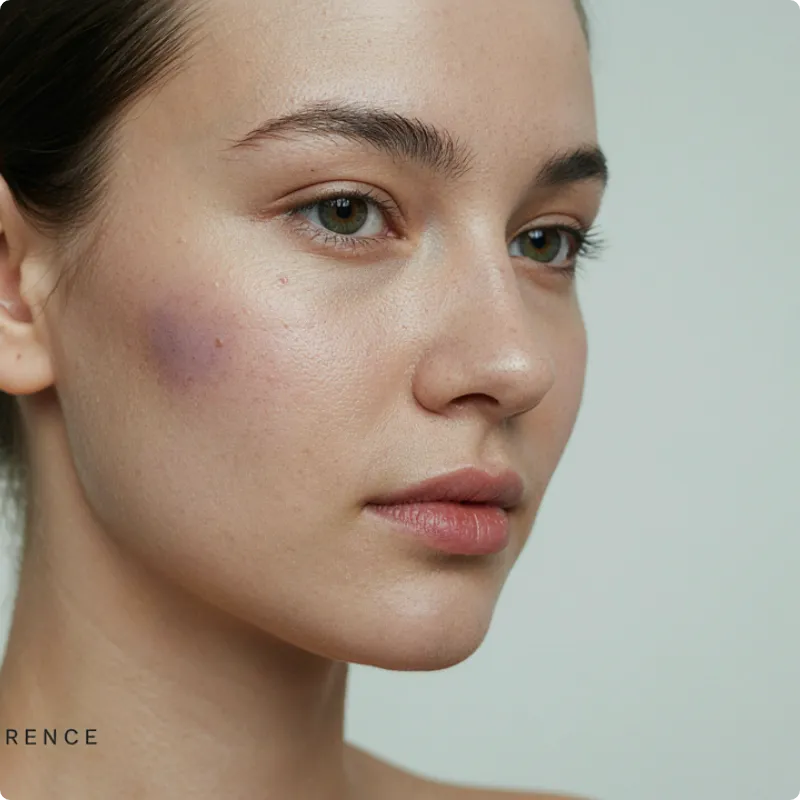
Most bruises will fade 1-3 days. Of the 50 patients, the majority suffered from only slight bruising for that period. Bruises around the eyes, and on thin skin can take longer. As they heal, they can change color from purple to green to yellow. Avoid rubbing or pressing on the area. After 24 hours, a bruise may be covered with cosmetics, if the doctor says it is ok.
Combination of tenderness and a tight feeling
You may have a sore or tight feeling in your face for a couple of days. The sensation is similar to a mild sunburn sensation. It should get better every day. If the pain intensifies rather than subsiding it is a red flag.
Mild bumps or slight roughness of the surface
In the first few days it is normal to have small soft bumps at the injection sites. They are under the skin and fluid and they are PRF. They are absorbed by your body as the swelling subsides. Avoid rubbing them if not instructed by your doctor.
Discomfort of the blood drawing experience
When the blood is drawn it may leave a small bruise on the arm. Some persons experience lightheadedness. Have a small meal and drink water prior to your visit to reduce that risk.
PRF Recovery Timeline: What to Expect Day by Day
Most people return to normal activity within a week. The timeline below shows what a typical recovery looks like.
First 24 Hours
This time frame is when redness, warmth and tenderness are at their highest. The injection sites are marked with small bumps. Avoid applying make-up or touching your face.
Days 2 to 3
This is where swelling tends to be at its peak and then begins to subside. The darkest color of bruises is visible. Most people feel comfortable going to work, but if there are signs of bruising, he or she would prefer to stay home.
Days 4 to 7
Most people have reduced swelling and redness. Bruises become yellow and shrivel. Your skin should be normal to the touch. Anything that gets worse during this time should be called one’s doctor.
Weeks 2 to 4
There are no side effects. As healing continues, you might feel smoother and have more vibrant skin. Make the initial judgment but not the final judgment.
Weeks 4 to 12
As with any collagen product, the effects are gradual and will continue to improve with time. In the 2020 study, the patient received three monthly sessions and the results were evaluated after 3 months. The number of sessions will be determined by the skin type and the objective you’re looking for.
Rare PRF Side Effects and Complications
Serious problems are rare. You should still know them so you can act fast.
Infection
Any injection can lead to infection. Signs include spreading redness and growing pain and warmth and fever and pus. Sterile single use kits and proper skin cleaning lower the risk. Skip makeup for 24 hours and keep unwashed hands off the area.
Hard Lumps That Do Not Fade
A lump that feels firm and stays past 2 weeks is not a normal bump. It needs an exam. Your doctor can tell you whether it needs treatment or simple monitoring.
Impaired Blood Flow to the Skin
Injected material can press on a small blood vessel or enter it. This can reduce blood flow to the skin. Reports are rare. Sudden sharp pain and pale or dusky skin and a white patch are the signs. Treat these as urgent and contact your doctor right away.
Asymmetry or Uneven Results
One side can swell more than the other in the first week. That does not mean the result is uneven. Wait 2 weeks before you judge. Real unevenness is uncommon and your doctor can correct it at a follow up visit.
Reaction to Numbing Cream or Cleanser
True allergy to PRF is very unlikely because the material comes from you. A rash or itching usually traces back to numbing cream or antiseptic. Tell your doctor about any past skin reactions before treatment.
When PRF Side Effects Are Not Normal: Warning Signs
Contact your doctor the same day if you notice any of these signs.
- Swelling that grows after day 3 or lasts beyond day 5
- Pain that gets worse instead of better
- Fever or chills
- Redness that spreads or skin that feels hot and hard
- Pus or fluid leaking from an injection point
- Skin that looks pale or white or dusky or blue
- A hard painful lump that stays past 2 weeks
- Any change in vision
Sudden skin color change or a vision change is an emergency. Seek care immediately and do not wait for an appointment.
Who Has a Higher Risk of PRF Side Effects
Some health factors raise your risk of bruising or complications. Your doctor should review these with you before treatment.
- Blood thinners such as warfarin need a doctor decision first
- Bleeding or platelet disorders
- Active skin infection or a cold sore or a heavy acne flare in the treatment area
- Pregnancy or breastfeeding
- Smoking which slows healing
Be honest during your consultation. A complete history lets the doctor decide whether PRF suits you.
How to Reduce PRF Side Effects
Before Your Session
Tell the doctor about every medicine and supplement you take. Ask whether you should pause aspirin or ibuprofen or fish oil or vitamin E. Never stop a prescribed medicine on your own. Skip alcohol for 24 hours and drink plenty of water. Reschedule if you have a breakout or cold sore in the area.
After Your Session
Skip makeup for 24 hours. Avoid massage and saunas and hard workouts for 48 hours. Sleep with your head raised. Use sunscreen every morning. Ask your doctor which pain relief is safe because some pain medicines increase bruising.
Some people who want better skin quality with little downtime also look at skin booster injections. Your doctor can compare the two for your skin type.
PRF vs PRP Side Effects: Is There a Difference?
PRF and PRP cause the same short list of side effects. Both can cause redness and swelling and bruising. The main difference is the preparation. PRF skips added anticoagulant and releases growth factors more slowly.
PRP for face follows a similar process with a different blood preparation. Your doctor will explain which option fits your goals.
Final Thoughts on PRF Side Effects
Normal PRF side effects are redness and swelling and light bruising that fade within about 5 days. Anything that grows worse or brings fever or color change or vision change is not normal. Good prep and honest medical history and careful aftercare keep most problems away. Book a consultation to check whether PRF suits your skin and health history. Which side effect worries you most before treatment?
FAQs
PRF is generally safe for the face because it uses your own blood. A 2020 study of 11 women who received three monthly i-PRF sessions reported no major adverse effects. Safety still depends on sterile technique and a doctor who screens your health history first.
Swelling usually settles within 5 days. A review of 50 facial patients found no swelling that lasted longer than 5 days. Swelling that grows after day 3 or stays past day 5 needs a doctor check.
Yes. Light bruising is normal and most bruises fade in 1 to 3 days. Bruises near the eyes can last a little longer. Large dark bruises or bruises with severe pain need a call to your doctor.
PRF can cause small soft bumps in the first days. These bumps soften as your body absorbs the material. A hard or painful lump that stays past 2 weeks is not normal and needs an exam.
True allergy to PRF is very unlikely because the material comes from your own blood. Reactions usually trace back to numbing cream or skin cleanser. Tell your doctor about any past skin reactions before the session.
Quick Links
Certified Endolift Specialist
at Dynasty Clinic
Copyright © 2026 Dr. Sima . All Rights Reserved. Developed by Digital Marketing Agency in Dubai