
Salmon DNA vs. Collagen: How Do They Support Skin Health Differently?
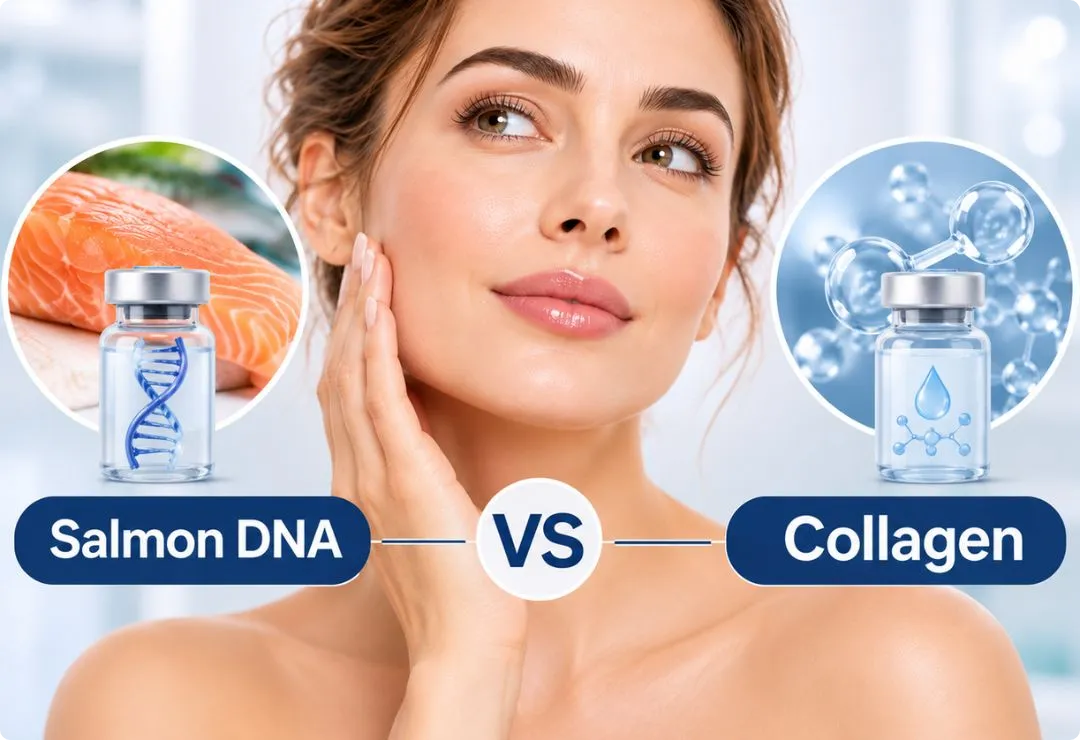
Salmon DNA vs collagen is the question many skin-care shoppers ask right now, and the answer isn’t obvious. Both promise better skin. They don’t work the same way, though. Salmon DNA helps your skin repair itself, while collagen gives it structure and firmness. Dr. Sima in Dubai explains each one in plain words, so you can pick the option your skin needs. Read on, then book a consultation if you want a clear plan.
Salmon DNA vs Collagen: The Short Answer
The simplest way to compare salmon DNA vs collagen is by the job each one does. Salmon DNA, also called PDRN or polynucleotides, tells your skin cells to repair and renew. Collagen is a protein that keeps skin firm and bouncy. If your skin were a house, collagen would be the frame and salmon DNA would be the repair crew.
Neither wins every time. Your age, skin type, and goals decide.
What Is Collagen, and Why Does Your Skin Need It?
Collagen is the most common protein in your body. In skin, it forms a mesh that keeps everything smooth and firm. Your body makes plenty of it in your teens and early 20s. After that, production slips by about 1% a year, according to the figure experts often quote. Sun, smoking, stress, and bad sleep speed up the loss. Fine lines come first, then thinner, looser skin.
Collagen products try to fill the gap. You can drink them, take capsules, or use creams. Oral collagen breaks down in your gut, and a few studies suggest it may slightly improve hydration and elasticity. Creams are less promising, because collagen molecules are too big to sink deep. They mostly soften the surface.
What Is Salmon DNA (PDRN)?
Many people comparing salmon DNA vs collagen don’t know where salmon DNA comes from. Labs purify DNA fragments from salmon or trout reproductive cells, then turn them into a medical-grade ingredient called PDRN, short for polydeoxyribonucleotide. Some brands call it polynucleotides.
Doctors have used PDRN for years to help wounds heal, and skin clinics later adopted it for skin quality. Your skin cells may reuse the fragments as raw material, and they may read them as a signal to repair.
A doctor usually places it in the skin with tiny injections. It doesn’t plump you up like a filler. It works on skin health instead. You can read about Dr. Sima’s salmon DNA treatment on her service page.
How Salmon DNA Supports Your Skin
Early studies and clinical use suggest salmon DNA can improve hydration, so skin looks fresher and less papery. Texture often smooths out, tone looks brighter, and irritated skin may calm down. It can also help skin recover after other treatments. Fine lines may soften too, but that’s a slow bonus.
Results usually build over several sessions. Nobody walks out looking ten years younger. Still, many people feel their skin gets stronger as the weeks pass. When you weigh salmon DNA vs collagen for skin repair, salmon DNA has the clearer role.
How Collagen Supports Your Skin
Collagen is all about structure. With healthy levels, skin feels springy and full. When levels drop, the bounce fades.
Supplements hand your body the building blocks, but your body decides where they go, and your face doesn’t always get first pick. That’s why results are modest. Most studies run eight to twelve weeks, and you need to keep taking collagen daily to hold the effect.
Vitamin C matters too, because your body needs it to build collagen. Sunscreen, a balanced diet, and decent sleep help more than most people expect.
Salmon DNA vs Collagen: Key Differences
The biggest gap in salmon DNA vs collagen is the job each one does. Salmon DNA tells your skin cells to repair and renew. Collagen supplies the material your skin’s structure is built from.
How you get them differs too. A doctor guides salmon DNA treatment through skin injections. Collagen comes as supplements, drinks, or creams that you use on your own.
Speed is another difference. Salmon DNA builds over a series of sessions, while collagen needs daily use for weeks. And the two suit different skin. Salmon DNA often fits thin, dull, dry, or tired skin. Collagen fits people who want gentle daily support in early aging.
Salmon DNA vs Collagen: Which Is Right for Your Skin?
Start with what bothers you most. If your skin feels thin, dull, dry, or sensitive, salmon DNA may make more sense. It can also help skin that’s recovering from other treatments. If you’re just starting to see signs of aging and want an easy daily habit, collagen supplements might be enough, though they’re slow.
One warning: neither option lifts deep sagging. If your skin has lost a lot of firmness, Dr. Sima may suggest another treatment, or add one. She examines your skin first, then tells you what’s realistic.
Can You Use Salmon DNA and Collagen Together?
Yes. In the salmon DNA vs collagen debate, you don’t have to pick just one. They don’t compete, since they work in different ways. Salmon DNA helps skin cells perform better, and collagen supports the structure those cells build.
Daily sunscreen, enough water, and good sleep make both work harder. Before you add a supplement to your plan, ask Dr. Sima what suits your routine.
Is Salmon DNA Safe?
Safety matters in any salmon DNA vs collagen comparison. When a qualified doctor gives it, salmon DNA is generally well tolerated. You might see mild redness, swelling, or bruising where the needle went in, and it usually settles in a few days.
The ingredient comes from fish, so tell Dr. Sima about any fish or salmon allergy. Mention pregnancy, breastfeeding, or an active skin infection too. She reviews your history before she recommends anything.
Book Consultation with Dr. Sima
The salmon DNA vs collagen choice has no single answer. Your skin, age, and goals shape the right pick. Dr. Sima examines your skin, explains your options plainly, and builds a plan that fits you. Want healthier-looking skin? Read more about her salmon DNA treatment and book your consultation in Dubai today.
FAQs
Salmon DNA helps skin cells repair and renew. Collagen is a structural protein that keeps skin firm.
It may support the cells that make collagen, so it can help indirectly. It isn’t a collagen product.
That depends on your skin and goals. Dr. Sima sets the plan after she examines you.
Most people notice gradual changes over several weeks. Everyone responds differently.
Quick Links
Certified Endolift Specialist
at Dynasty Clinic
Copyright © 2026 Dr. Sima . All Rights Reserved. Developed by Digital Marketing Agency in Dubai