
XERF vs Thermage vs Ultherapy: Which Skin Tightening Treatment Suits You?
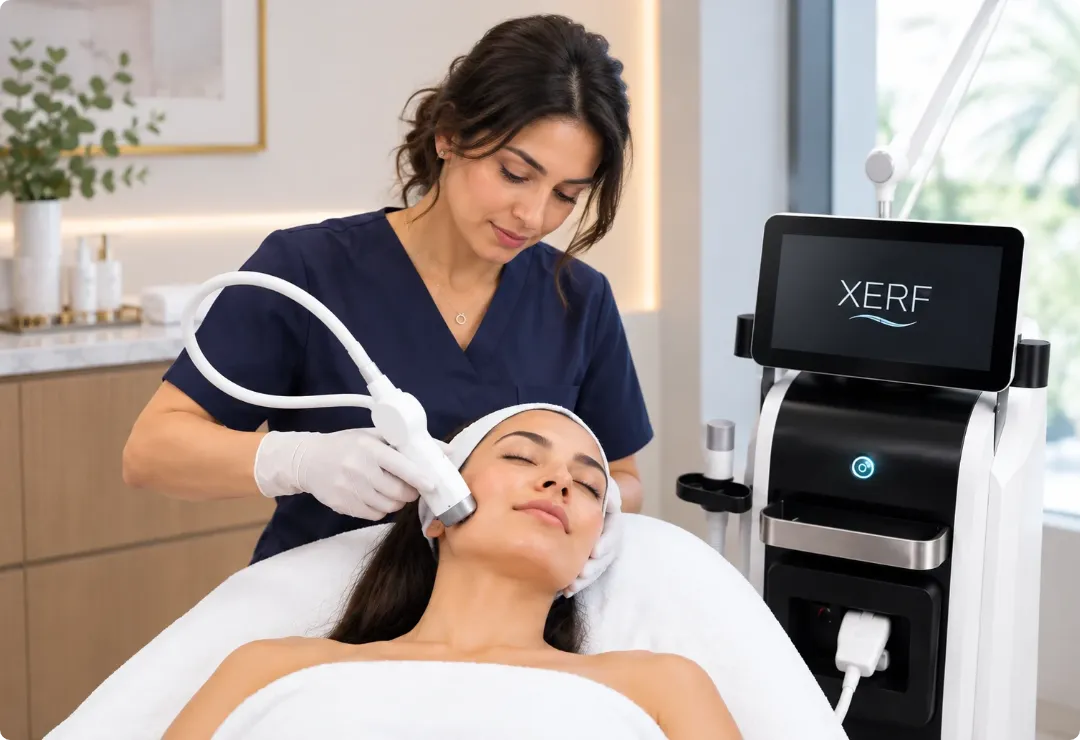
You notice your jawline looks softer than it did a few years ago. A friend swears by XERF while another recommends Thermage and your feed keeps pushing Ultherapy. Every option promises firmer skin without surgery. Dr. Sima is an aesthetic doctor in Dubai who performs XERF skin tightening. Patients ask her the same question every week. Which treatment works best for them? The honest answer depends on your skin and how much laxity you have. This guide compares XERF vs Thermage vs Ultherapy in plain terms. Each section explains how the treatment works and how it feels. The last sections cover who each option suits and when none of them is enough.
Quick Takeaways
|
XERF vs Thermage: What Changes for You?
Both treatments are monopolar radiofrequency. Two differences matter to most patients.
Frequencies and Depth
Thermage works at one frequency. XERF works at two. Cynosure Lutronic says this lets the system heat several depths in a single pass. One New York dermatologist told Bustle that Thermage tightens more superficially and that XERF gives a deeper lift.
Newer also means less published data. Ask any clinic about the evidence before you book.
Comfort and Downtime
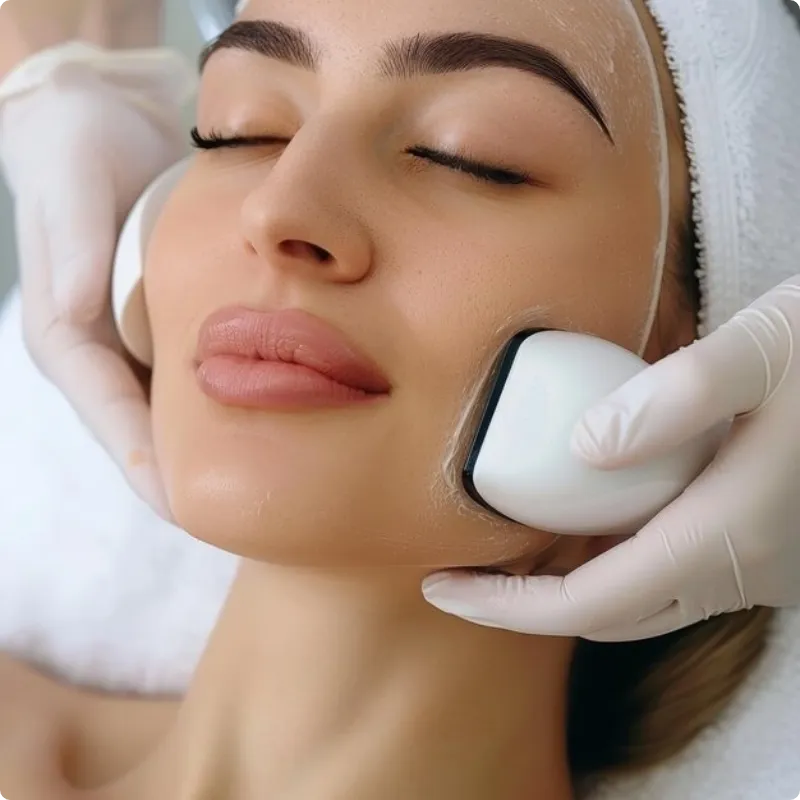
Both treatments use cooling to protect the skin surface. Most patients describe warmth rather than pain. Dr. Sima generally does not need numbing cream for XERF. Mild redness can appear and usually settles quickly.
What Separates XERF From Thermage and Ultherapy?
XERF and Thermage use radiofrequency energy to heat the skin. Ultherapy uses focused ultrasound instead. XERF stands apart because it combines two radiofrequencies in one system. The table below sets the three treatments side by side.
XERF | Thermage | Ultherapy | |
|---|---|---|---|
Energy type | Dual-frequency monopolar radiofrequency | Monopolar radiofrequency | Micro-focused ultrasound |
Frequencies | 6.78 MHz and 2 MHz | One frequency | Ultrasound beam |
Needles | None | None | None |
Sensation | Warmth with built-in cooling | Warmth and tightness | Many patients describe a deep stinging |
Main goal | Firming across several depths | Firming and smoothing | Lift in deeper support layers |
Often suits | Mild to moderate laxity | Crepey texture and general firmness | Mild sagging and loss of lift |
Downtime | Little to none | Minimal | Minimal |
Track record | Newest of the three | Over 5 million treatments worldwide by September 2025 | Long clinical history |
Every one of these treatments works without needles or incisions. Patients usually return to normal activities straight after a session. None of them replaces surgery for significant sagging.
How Each Treatment Works
How XERF Works
XERF comes from Cynosure Lutronic and uses no needles. The system combines two radiofrequencies. A 6.78 MHz frequency works in the upper skin layers while a 2 MHz frequency reaches deeper tissue.
XERF reads the impedance of your skin in real time. Dr. Sima uses that feedback to adjust the energy during your session. Built-in cooling protects the skin surface.
Many people search for XERF laser after celebrity coverage. XERF is not a laser. It is a radiofrequency treatment. Dr. Sima lists every device she uses on the Machines and Technology page.
How Thermage Works
Thermage uses monopolar radiofrequency at a single frequency. The energy heats the dermis and makes collagen contract. New collagen then builds over the following months. Clinics use it on the face and on body areas such as the abdomen and thighs.
Thermage has a long record. It passed 5 million treatments worldwide by September 2025.
How Ultherapy Works
Ultherapy uses micro-focused ultrasound. The beam delivers energy to deeper support layers beneath the skin. Ultherapy Prime adds real-time ultrasound imaging so the practitioner can see the tissue layers. Many patients describe a sharper and deeper sensation than the warmth of radiofrequency.
XERF vs Ultherapy: Radiofrequency or Ultrasound?
Energy and Depth
Ultherapy sends focused ultrasound to deeper support layers. XERF heats several depths with radiofrequency. For early jowls Ultherapy often comes up first because it focuses on lift. XERF suits mild to moderate laxity and firms the lower face and neck.
Sensation and Recovery
Many patients find ultrasound treatments more uncomfortable than radiofrequency. XERF produces warmth while cooling protects the surface. Dr. Sima sets the depth and intensity for your skin. Most XERF patients return to normal activities straight away.
XERF vs Thermage vs Ultherapy: Which One Suits Your Concern?
Your concern matters more than the device name. Each concern below shows which treatment people often consider first. Dr. Sima confirms the right match after she examines your skin.
Early Jowls and a Softer Jawline
Ultherapy and XERF both come up for this concern. Lift is the main goal of Ultherapy. XERF suits early to moderate laxity without needles. Established jowls often need a stronger approach.
Crepey Neck and Fine Lines
Clinicians often choose Thermage for crepey texture and overall firmness. XERF also firms crepey neck skin and softens fine lines. Dr. Sima checks how much laxity sits beneath the crepey surface before she recommends treatment.
Scars and Uneven Texture
Scars and uneven texture need more than heat alone. Morpheus8 combines microneedling with radiofrequency and often suits scars and texture. XERF has no needles and focuses on tightening.
Your Skin Type and Medical History
Skin type changes how your skin responds to energy. Dr. Sima assesses your Fitzpatrick skin type and reviews your medical history before she recommends treatment. Pregnancy and implanted electronic devices make XERF unsuitable.
What to Expect From a XERF Session With Dr. Sima
Your Consultation
During your consultation Dr. Sima discusses your goals and medical history. She examines your skin laxity and facial anatomy. Together you decide whether XERF is the right treatment. Dr. Sima then develops a personalized treatment plan for the areas and the number of sessions.
The Session
The session starts with Dr. Sima cleansing your skin. She then sets the depth and intensity before the handpiece moves over the treatment area. Cooling protects your skin surface throughout. You feel warmth during the session.
Three depth settings and ten intensity levels let Dr. Sima match each session to your skin.
Recovery and Aftercare
Downtime is little to none. Mild redness can appear. Most patients resume normal activities straight away. Dr. Sima gives you aftercare instructions based on how your skin responds. Daily sun protection also helps your results last.
When Skin Tightening Is Not Enough
Non-surgical devices have limits. Prominent neck bands and a heavy neck often need more than heat can deliver. The same goes for deep skin folds and advanced laxity.
Fullness under the chin also needs a different plan. Contouring treatments address fat while tightening devices address skin.
Some patients with greater laxity benefit from Face Endolift instead. During your consultation Dr. Sima explains the difference. Significant excess skin may need surgery and she will tell you so.
What the Research Says About XERF vs Thermage vs Ultherapy
Radiofrequency heating changes collagen. A pilot study on monopolar radiofrequency followed healthy adults aged 25 to 80 with Fitzpatrick skin types III to V. Skin analysis and tissue samples showed collagen remodeling and reorganized elastic fibers. The study was small so it supports the mechanism more than any long-term promise.
XERF itself has less published data. Most of the research Cynosure Lutronic cites comes from porcine models. Early human reports describe better laxity and texture over weeks and months.
Large studies tracking XERF over five or ten years do not exist yet. Some clinics report results lasting 12 to 18 months. Treat that figure as an estimate because your age and sun exposure change the outcome.
Is it possible to combine XERF with other therapies?
Many patients combine tightening with improving the quality or volume of their skin. The order is determined during the consultation by Dr. Sima. Typical combinations are: dermal fillers, biostimulators, laser.
PRF also helps to enhance skin quality, tighten and Dr. Sima provides PRF facial treatment for this.
How much does such treatment cost?
The cost will vary based on the size of the area to be treated as well as the laxity that you have. The complete count depends on the number of sessions and the settings. Only quotes that are the same length and address the same spaces are comparable to each other. Dr. Sima will confirm your plan and cost following your consultation.
How to Choose Between XERF Thermage and Ultherapy
The right pick in XERF vs Thermage vs Ultherapy comes down to your concern and your degree of laxity. Ultherapy focuses on lift. Thermage focuses on firmness and texture. XERF firms several depths without needles.
Dr. Sima performs XERF and examines your skin before she recommends anything. Read the full XERF skin tightening page to see how a session works. Book a consultation to find out whether XERF fits your goals. Which concern bothers you most right now: the jawline or the neck?
FAQs
Neither treatment wins for every patient. XERF uses two frequencies and has the newer technology. Thermage has the longer track record. Dr. Sima assesses your laxity to see whether XERF fits.
They aim at different goals. Ultherapy focuses on lift in deeper layers. XERF focuses on firming across several depths. Your degree of laxity decides which one fits.
Most patients describe XERF as warmth. Many describe Ultherapy as a sharper and deeper sensation. Built-in cooling keeps the skin surface comfortable during XERF. Sensation still varies from person to person.
Results are not permanent because aging continues. Some clinics report 12 to 18 months. Your age and laxity and sun exposure affect the outcome. Dr. Sima sets a maintenance plan after she assesses your skin.
The number depends on your age and skin quality and degree of laxity. Some clinics advise two sessions four to six weeks apart. Dr. Sima recommends a plan after she assesses you in person.
Quick Links
Certified Endolift Specialist
at Dynasty Clinic
Copyright © 2026 Dr. Sima . All Rights Reserved. Developed by Digital Marketing Agency in Dubai