
Hollywood Spectra vs Carbon Laser Peel: What's the Difference?
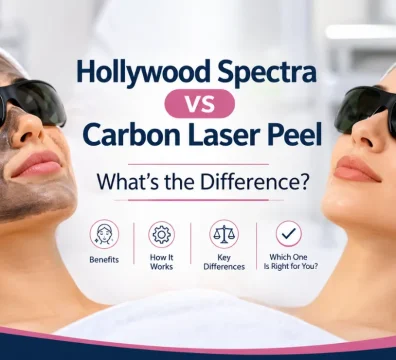
Have you ever looked into laser facials and found yourself comparing Hollywood Spectra with a carbon laser peel? The names can make it sound like you’re choosing between two completely different treatments. In reality, the comparison is a little more complicated.
Hollywood Spectra is the name of a laser platform developed by Lutronic. A carbon laser peel, on the other hand, describes a treatment technique in which carbon lotion is applied to the skin before laser energy is used. The popular Hollywood Laser Peel is one particular carbon-assisted treatment performed with Hollywood Spectra.
So, Hollywood Spectra vs Carbon Laser Peel isn’t quite a comparison of two separate machines. It’s more about understanding the technology being used and the treatment your clinic is actually offering.
If you’re considering either option for oily skin, enlarged pores, dullness or uneven tone, here’s what you should know before booking.
What Is Hollywood Spectra?
Hollywood Spectra is a Q-switched Nd laser system designed for several skin treatments. Depending on the settings and treatment protocol, it can be used for concerns such as pigmentation, uneven skin tone, certain acne-related concerns and skin rejuvenation.
One of its best-known treatments is the Hollywood Laser Peel, sometimes called the Hollywood Peel or Spectra Peel.
The treatment became popular because it doesn’t involve the recovery period associated with more aggressive resurfacing procedures. People often choose it before an event or when they want to improve the appearance of dull skin without taking several days off.
How Does Hollywood Spectra Work?
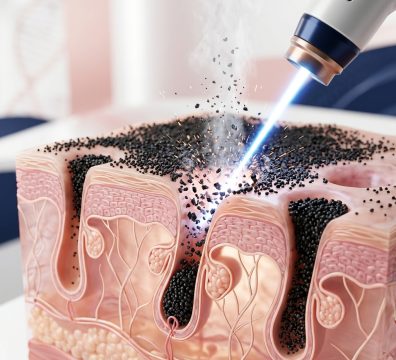
During a Hollywood Laser Peel, a layer of carbon-based lotion is applied to the skin. The carbon particles sit on the surface and within the openings of the pores.
The laser is then used in carefully selected modes to heat the carbon and remove it. As the carbon particles are treated, they help lift surface debris and exfoliate the skin.
The procedure also delivers laser energy to the skin, which may help improve its appearance and texture over a course of treatments.
The exact protocol matters. A Hollywood Spectra session without carbon lotion isn’t necessarily the same treatment as a Hollywood Laser Peel.
What Is a Carbon Laser Peel?
A carbon laser peel is a laser-assisted facial treatment that uses a carbon suspension or lotion before laser application.
The carbon acts as a target for the laser energy. Once the laser passes over the treated skin, the carbon particles are heated and removed, helping exfoliate the surface and clear some debris associated with the pores.
Carbon peels are often offered to people who complain about:
- Excess oil on the face
- Enlarged or noticeable pores
- Blackheads and congested-looking skin
- Uneven skin texture
- Dull complexion
- Mild acne-related concerns
The treatment is sometimes marketed as a carbon facial, carbon Hollywood peel or carbon laser facial. These names can overlap, which is why it’s worth asking a clinic what procedure it actually performs.
A carbon peel is not automatically performed using Hollywood Spectra. Other laser systems may also be used for carbon-assisted treatments, depending on their capabilities and the provider’s protocol.
Hollywood Spectra vs Carbon Laser Peel: The Actual Difference
This is where the comparison becomes easier to understand.
Hollywood Spectra refers to the equipment. A carbon laser peel refers to a procedure that uses carbon lotion and laser energy.
The Hollywood Laser Peel is a specific treatment that combines the two.
Feature | Hollywood Spectra | Carbon Laser Peel |
What it refers to | Laser platform | Treatment technique |
Carbon lotion | Used for Hollywood Laser Peel, not every Spectra treatment | Usually an essential part of the procedure |
Laser technology | Hollywood Spectra Nd system | Depends on the laser used |
Main purpose | Multiple laser treatments for different skin concerns | Surface exfoliation and improvement in the appearance of oily, dull or congested skin |
Treatment options | Can be used for several laser protocols | Usually focused on a carbon-assisted facial |
Downtime | Depends on the treatment and settings | Often minimal, but varies |
Results | Depend on the selected Spectra treatment | Depend on the laser, carbon protocol and individual skin |
The most important thing to remember is that a carbon peel performed with Hollywood Spectra may be marketed as a Hollywood Laser Peel.
What Skin Concerns Can These Treatments Help With?
Neither treatment is a universal solution for every skin problem. The benefit depends on what you’re trying to improve and how the procedure is performed.
Oily Skin and Enlarged Pores
This is one of the reasons people look into carbon laser facials.
When your skin produces a lot of oil, your pores may become more noticeable. Dead skin cells and oil can also contribute to congestion.
A carbon peel may help reduce surface oiliness and make the skin appear cleaner and smoother. Some people notice that their skin looks less shiny after treatment.
However, pores don’t permanently disappear. Their appearance is influenced by genetics, oil production, skin elasticity and other factors.
If enlarged pores are your main concern, ask whether the treatment plan includes options specifically intended to improve pore appearance and skin texture.
Blackheads and Congested Skin
Carbon-assisted laser treatments are often offered for blackheads and congested-looking skin.
The carbon helps target surface debris during the laser passes. This may improve the appearance of the skin, particularly when congestion is mild.
But blackheads are not always solved by a single facial. If you regularly develop clogged pores, your skincare routine and acne treatment may matter more over time.
A carbon peel should not replace appropriate acne treatment when you have persistent breakouts.
Dullness and Uneven Texture
Some people simply feel that their skin looks tired. Makeup doesn’t sit as smoothly, and the complexion appears uneven even when there are no major acne or pigmentation problems.
A carbon laser peel may provide a temporary improvement in brightness and surface smoothness.
If dullness is related to dehydration, irritation or an impaired skin barrier, though, a laser facial may not be the first treatment you need. Sometimes the answer is a much simpler skincare routine.
Pigmentation and Dark Spots
This is an area where treatment selection becomes particularly important.
Hollywood Spectra can be used for certain pigment-related concerns, depending on the laser mode and settings. That doesn’t mean every pigmentation problem should be treated with the same procedure.
Melasma, sun spots and post-inflammatory hyperpigmentation are different conditions. They don’t respond identically to laser treatment.
For example, melasma can become more noticeable after excessive heat or irritation. Aggressive treatment may actually make the pigmentation worse.
Before treating dark spots, it’s sensible to identify their cause. You can also read Dr. Sima’s guide on how to remove pigmentation from face for a closer look at treatment options.
Which Treatment Is Better for Acne?
Both Hollywood Laser Peel and carbon-assisted laser treatments are frequently discussed in relation to acne-prone skin.
Some laser protocols may help improve the appearance of inflammatory acne, oiliness or acne-related redness. However, the evidence and results vary depending on the treatment used.
If you have active acne, the important question isn’t simply whether a carbon peel can help. It’s whether the procedure is appropriate for your type and severity of acne.
Mild congestion is different from painful cystic acne.
A doctor may recommend medical acne treatment first, with laser procedures considered as an additional option rather than the main treatment.
Does Hollywood Spectra Give Better Results Than a Carbon Peel?
Not necessarily.
The name Hollywood Spectra can sound more advanced, but the machine alone doesn’t determine the outcome. The treatment protocol, laser settings, practitioner experience and your skin condition all matter.
A carbon peel performed with a suitable laser may offer similar surface benefits to another carbon-assisted treatment.
If you’re comparing clinics, ask these questions:
- Which laser system will be used?
- Is the treatment a Hollywood Laser Peel or another carbon peel?
- What skin concern is the procedure intended to address?
- How many sessions are usually recommended?
- What results are realistic for your skin?
- Are there any risks based on your skin tone or medical history?
These questions are more useful than choosing a treatment simply because its name sounds familiar.
What Happens During a Hollywood Laser Peel?
The procedure is usually straightforward and takes relatively little time.
1. Skin Preparation
The face is cleansed to remove makeup, oil and other residue.
Your practitioner should also check the skin for irritation, active inflammation or other issues that may affect treatment.
2. Carbon Lotion Application
A thin layer of carbon lotion is spread over the treatment area.
It is left in place for a short period so the carbon can settle onto the skin and into the pores.
3. Laser Treatment
Protective eyewear is provided before laser application.
The laser is then passed over the treated area using the selected settings. The carbon absorbs the laser energy and is removed during the procedure.
You may feel warmth or small snapping sensations, depending on the settings and your sensitivity.
4. Finishing and Aftercare
Once the procedure is complete, the skin is checked and soothing products may be applied.
Your practitioner should explain what to avoid over the next few days and when you can return to your usual skincare routine.
Is a Carbon Laser Peel Painful?
Most people describe the sensation as manageable.
You may feel warmth, mild tingling or little snapping sensations during the laser passes. Some people are more sensitive than others.
The treatment is generally not associated with the same level of discomfort as more intensive laser resurfacing, although the experience depends on the device and settings.
If you feel unusual burning or significant pain during treatment, tell your practitioner immediately.
How Much Downtime Should You Expect?
One reason carbon laser peels are popular is their relatively short recovery period.
Many people experience little visible downtime. Mild redness or temporary sensitivity can occur, and the skin may feel slightly dry afterward.
Still, minimal downtime doesn’t mean absolutely no reaction.
Your skin may respond differently depending on its sensitivity, the laser settings and whether additional treatment steps are performed.
If you have an important event coming up, don’t assume the treatment will leave your skin perfect immediately. It’s better to schedule it with enough time for any unexpected redness or irritation to settle.
How Many Sessions Are Needed?
One session may make your skin appear brighter or smoother, but that doesn’t necessarily mean the underlying concern has been fully treated.
For ongoing concerns such as oily skin, acne or uneven texture, a practitioner may recommend a series of treatments.
The number of sessions varies. Some people may benefit from occasional treatments, while others need a different approach altogether.
There isn’t one fixed session count that works for everyone.
What Should You Do After a Carbon Laser Peel?
Aftercare is fairly simple, but it’s worth taking seriously.
Keep Your Skincare Gentle
Avoid immediately returning to strong exfoliating products.
For the first few days, your routine should focus on cleansing, hydration and protecting the skin.
If your practitioner recommends temporarily avoiding retinoids, exfoliating acids or other irritating products, follow those instructions.
Don’t Skip Sunscreen
Sun protection is especially important after laser treatment.
Use a broad-spectrum sunscreen and limit direct sun exposure while your skin settles. This is particularly relevant if you’re prone to pigmentation.
You can read more about laser skin rejuvenation treatment and the importance of choosing an appropriate treatment for your skin.
Avoid Picking or Scrubbing
If your skin feels rough or develops small flakes, don’t try to remove them manually.
Picking or scrubbing can cause irritation and may increase the risk of dark marks.
Are Hollywood Spectra and Carbon Laser Peels Safe?
Both treatments can be well tolerated when performed appropriately, but neither is completely risk-free.
Possible side effects include:
- Temporary redness
- Mild swelling
- Dryness or irritation
- Acne-like breakouts
- Changes in skin pigmentation
- Burns or scarring in uncommon cases
People with medium to deep skin tones need particular care because inflammation after laser treatment can trigger post-inflammatory hyperpigmentation.
That doesn’t automatically mean laser treatments are unsuitable for darker skin. It means the practitioner needs to understand your skin type and choose the treatment settings carefully.
A consultation should include your medical history, current skincare products, previous laser treatments and any history of pigmentation problems.
The American Academy of Dermatology explains the benefits and risks of laser procedures in its guide to skin conditions treated with lasers.
Hollywood Spectra vs Carbon Laser Peel: Which One Should You Choose?
If your main concern is oily skin, mild congestion or a dull-looking complexion, a carbon laser peel may be worth discussing with your dermatologist.
If you have pigmentation, acne scars or more complicated skin concerns, the answer may be different.
Hollywood Spectra offers several treatment possibilities, but the right protocol depends on what your skin actually needs. Choosing a carbon peel simply because it’s popular may not give you the result you’re looking for.
For some people, a different laser treatment may be more appropriate. For others, medical skincare or a chemical peel may make more sense.
The best treatment is the one that addresses your concern without exposing your skin to unnecessary irritation or risk.
A Final Note Before Booking
Hollywood Spectra and carbon laser peels are often discussed as competing treatments, but the distinction is simpler than it first appears.
One refers to the laser equipment. The other describes a treatment method. The Hollywood Laser Peel combines them.
If you’re considering a laser facial in Dubai, take time to understand what your clinic is offering and what it can realistically achieve. A proper skin assessment should come before a treatment recommendation, especially if you have acne, melasma or a history of pigmentation.
Your skin doesn’t necessarily need the most popular facial. It needs the treatment that makes sense for its condition.
FAQs
No. Hollywood Spectra is a laser platform, while a carbon laser peel is a procedure using carbon lotion and laser energy. The Hollywood Laser Peel is a specific carbon-assisted treatment performed with Hollywood Spectra.
It may help improve the appearance of congested skin and blackheads. Results vary, and persistent blackheads may need a regular acne or pore-care treatment.
Some laser protocols can improve certain pigment concerns, but a carbon peel isn't suitable for every type of pigmentation. Melasma and post-inflammatory hyperpigmentation require careful assessment.
The procedure itself is relatively quick. The exact appointment time depends on preparation, treatment steps and the clinic's protocol.
That depends on how your skin reacts. If there is redness or irritation, it's better to wait until your practitioner confirms that makeup is appropriate.
Not every treatment setting is suitable for every skin type. Your practitioner should assess your skin tone, sensitivity and pigmentation history before choosing the laser settings.
Quick Links
Certified Endolift Specialist
at Dynasty Clinic
Copyright © 2026 Dr. Sima . All Rights Reserved. Developed by Digital Marketing Agency in Dubai