
How to Lighten Pigmentation: A Doctor’s Guide to Clearer, Even Skin
A dark patch always seems to show up right when you spot it in a photo. Or in the bathroom mirror at 7am under harsh light.
Here’s how to lighten pigmentation in short. Protect your skin from the sun every day, use the right active ingredients for your type of pigmentation and see a doctor if nothing has budged after 3 months. Stubborn spots usually need a peel or laser on top of that.
We see this daily at our Dubai clinic. Year-round sun does a lot of damage here. Plenty of it is avoidable.
How to lighten pigmentation on face naturally
Aloe vera, green tea extract, licorice root and soy all have some evidence as mild brighteners. They probably help with light marks. They’re slow, though. They won’t touch deep melasma.
Skip lemon juice and baking soda. Lemon plus sun can cause a burn that leaves a darker mark than the one you started with.
Always pair natural remedies with daily broad-spectrum sunscreen, as UV exposure continuously triggers excess melanin production.
Consistent use over several months is key, but persistent hyperpigmentation usually requires professional dermatological treatments like chemical peels or targeted retinoids.
What causes pigmentation?
Your skin gets its color from melanin. Cells called melanocytes make it. They react to triggers by making extra in one spot. That spot turns darker than the skin around it.
Most triggers fall into two groups.
Sun and UV exposure
UV light is the biggest trigger. Melanocytes make more melanin to shield your skin. Years of that response leave sun spots, age spots and liver spots (three names for roughly the same thing).
Dubai’s UV index often climbs past 10 in summer. Winter is milder but still strong enough to darken spots you already have.
UVA rays also pass through car and office windows. A desk by a sunny window counts as exposure.
Hormones, acne and inflammation
Pregnancy, birth control pills and thyroid changes can set off melasma. Estrogen seems to play a big part, though researchers haven’t pinned down the full story.
Inflammation is the other big trigger. Acne, eczema, waxing burns and over-scrubbing can all leave post-inflammatory hyperpigmentation (PIH) behind.
Medium to deeper skin tones make more reactive melanin. So PIH is more common in them and tends to last longer.
Types of pigmentation and why the type matters
A cream that fades a sun spot can make melasma worse if it irritates your skin. Getting the type right comes first.
Sun spots, age spots and liver spots
These are flat, brown and sharply edged. They appear on the face, hands, chest and shoulders. They respond well to lasers and peels because the pigment sits close to the surface.
Any spot that changes shape, has mixed colors or bleeds needs a skin cancer check before anyone treats it.
Melasma
Melasma shows up as symmetrical gray-brown patches on the cheeks, forehead and upper lip. Hormones, sun and heat all feed it.
It’s the hardest type to treat. You can fade it a lot, but it tends to come back.
Pregnancy mask
Melasma in pregnancy usually starts in the second or third trimester. It often fades in the months after birth, though not always.
While you’re pregnant, stick to sunscreen, a wide hat and azelaic acid if your doctor agrees. Hydroquinone, retinoids and oral tranexamic acid wait until your doctor says otherwise.
What brings melasma back
Heat is a trigger many people miss. Hot kitchens, saunas and hot yoga can all flare it.
So can unprotected sun and harsh treatments. A tinted sunscreen with iron oxides helps because it blocks visible light, which plain sunscreens let through.
Post-inflammatory hyperpigmentation (PIH)
PIH is a flat brown or reddish mark left after acne, a bug bite or a cut. It’s different from an acne scar, which has texture.
PIH often fades by itself within 6 to 12 months. Treatment speeds that up.
How to lighten pigmentation at home
Home care is where everybody starts. It’s also where plenty of people overdo it by layering 5 strong products at once.
Start with sunscreen
Use SPF 50 broad spectrum every morning. Apply about two finger-lengths for your face and neck, then reapply every 2 hours when you’re outside.
The American Academy of Dermatology recommends SPF 30 or higher. We push for 50 in the UAE because the exposure is so intense.
Without daily sunscreen, nothing else on this page holds up.
Ingredients that fade dark spots
These have the best track record:
- Vitamin C serum: an antioxidant that slows melanin production and brightens dull skin. Use it in the morning under sunscreen. So, does vitamin C lighten pigmentation? Yes, gently. Give it 8 to 12 weeks.
- Niacinamide: reduces how much pigment moves into surface skin cells. Does niacinamide help with pigmentation? Modestly. It’s calm enough for sensitive skin and PIH.
- Azelaic acid: good for acne marks and melasma. Doctors often consider it acceptable in pregnancy.
- Kojic acid: a gentle brightener, usually at 1 to 2%. It irritates some skin, so patch test it.
- Retinol: speeds up cell turnover. Start 2 nights a week and skip it if you’re pregnant.
- Glycolic acid: exfoliates the surface. 5 to 10% works at home. More than that is overkill.
- Tranexamic acid: used in serums and as a tablet for melasma. The tablet needs a prescription and isn’t suitable if you have a history of blood clots.
- Hydroquinone: the strongest topical lightener. A doctor should prescribe it and set a cycle of around 3 months, because long use can cause darker patches.
Best serum and cream for pigmentation
No single product wins. The best cream for pigmentation depends on what you’re treating.
For sun spots, pair vitamin C in the morning with a retinoid at night. For melasma, try azelaic acid or tranexamic acid with niacinamide and strict sun protection. For acne marks, niacinamide and azelaic acid are a gentle start.
Buy from licensed pharmacies in the UAE. Skin-lightening creams of unknown origin sometimes contain mercury or strong steroids. The World Health Organization has warned about both.
Introduce 1 new product at a time. Patch test for 48 hours behind your ear.
Professional pigmentation treatment options
If 12 weeks of steady home care hasn’t changed much, book a consultation. A skin analysis shows how deep your pigment sits. Surface pigment fades quickly while deeper pigment takes longer.
You can read more about our approach on our pigmentation treatment in Dubai page.
Chemical peels for pigmentation
A chemical peel uses acids like glycolic, lactic or mandelic to loosen the top layer of skin and bring fresh, evenly toned skin forward. Most plans run 4 to 6 sessions, 2 to 4 weeks apart.
Expect a few days of flaking. Mandelic acid is gentler and usually better for deeper skin tones, since an overly strong peel can trigger rebound darkening.
Laser treatment for pigmentation
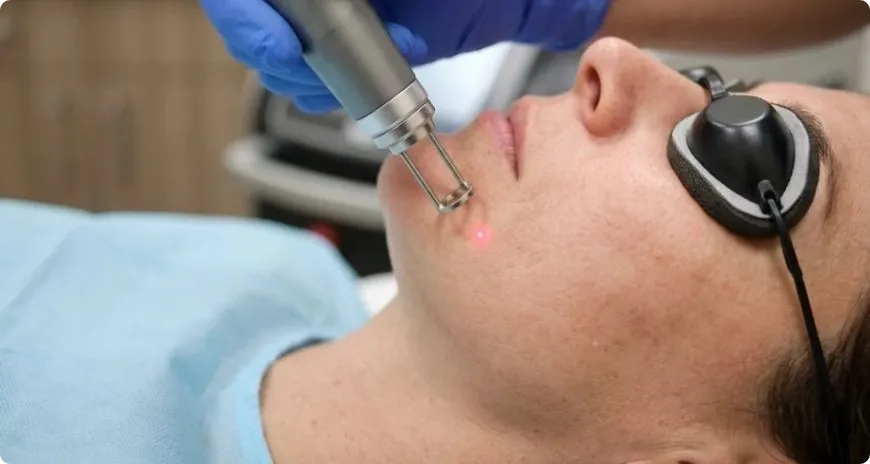
Lasers fire short bursts of light that shatter melanin into tiny pieces. Your body clears the fragments over the next few weeks.
- Q-switched lasers: the long-time standard for sun spots, age spots and some deeper marks.
- Pico lasers: faster pulses and less heat, so they often need fewer sessions. Good for PIH and sun damage.
- IPL (intense pulsed light): a broad-spectrum light that works well on sun spots in lighter skin. It’s riskier on deeper tones.
- Fractional lasers: useful when pigment comes with acne scars or rough texture.
Melasma needs a gentle touch. Low-energy settings work. High heat can make it come back darker. Our laser for skin rejuvenation page explains the options we use.
Microneedling, mesotherapy, skin boosters and exosomes
These sit in the supporting cast. Microneedling helps brightening serums sink in. Mesotherapy places small amounts of brightening vitamins and antioxidants just under the skin.
A skin booster improves hydration and glow, which makes uneven tone less noticeable. Exosome therapy supports healing after procedures, though the research is still growing.
None of them replace a peel or laser for stubborn spots.
What a skin consultation involves
A good consultation takes 20 to 30 minutes. The doctor asks about your medications, pregnancy plans, past reactions and how much time you spend in the sun.
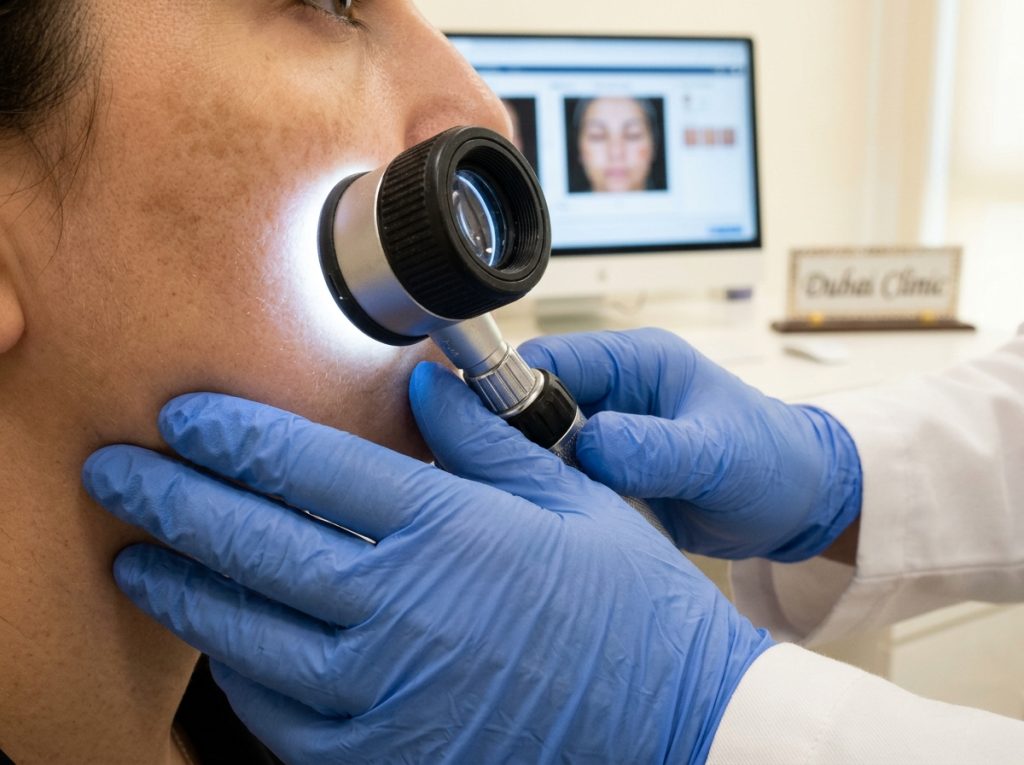
Then comes the skin analysis. Magnification and special lighting show how deep the pigment sits and whether the cause is sun, hormones or inflammation. That answer decides the treatment, so a clinic that quotes a package before looking at your skin is guessing.
You should leave with a written plan covering products, sessions, spacing and aftercare.
Laser vs chemical peel vs creams
Option | Best for | Typical plan | Downtime | Watch out for |
|---|---|---|---|---|
Creams and serums | Mild spots, melasma upkeep | 8 to 12 weeks, daily | None to mild irritation | Slow results |
Chemical peel | Surface sun damage, PIH, dull tone | 4 to 6 sessions | 3 to 7 days of flaking | Too strong a peel on deeper skin |
Pico or Q-switched laser | Sun spots, age spots, PIH | 3 to 6 sessions | 1 to 7 days | Needs an experienced operator |
IPL | Sun spots on lighter skin | 3 to 5 sessions | A few days | Riskier on deeper tones and melasma |
Fractional laser | Pigment with texture or acne scars | 3 to 5 sessions | 3 to 7 days | Longer recovery |
How to lighten pigmentation by area
Different spots on the body have different causes. Here’s how the common ones play out.
How to lighten pigmentation around the mouth
The area above the lip catches hormones, sun and friction. Threading, waxing and shaving all add inflammation.
Gentle azelaic acid or niacinamide works well here. Pause hair removal methods that irritate the skin while you treat it. A light peel or low-energy laser comes next if home care stalls.
Neck and underarms
Dark underarms usually come from friction, shaving and deodorant irritation. Switch to a gentler razor routine and try lactic acid a few nights a week.
On the neck, a velvety dark band in the folds can signal insulin resistance. If that sounds like you, see a doctor for a blood sugar check before buying any cream.
Hyperpigmentation caused by sun on hands, chest and shoulders
Sun spots on the backs of the hands and the upper chest are some of the most common things we treat. Skin there is thin and rarely gets sunscreen.
A pico laser or a series of light peels clears most of them. Daily SPF on hands (reapply after washing) keeps new ones from forming. Drivers should pay attention to the left arm and left side of the face, which collect the most window UV.
Post-acne marks and dark spots on the face
Everyone wants to know how to lighten dark spots on the face fast. The honest answer is that nothing works overnight. The fastest route is a peel or laser plus daily sunscreen. Most people see clear change in 4 to 8 weeks.
Treat active acne first. Never pick at spots, since every picked spot becomes a new mark.
How long does it take to lighten pigmentation?
Patience pays off here. Pigment took months or years to form, so it fades on a similar timeline.
Approach | First changes | Clear improvement |
|---|---|---|
Sunscreen plus vitamin C or niacinamide | 4 to 6 weeks | 8 to 12 weeks |
Prescription topicals | About 4 weeks | About 12 weeks |
Chemical peels | After the 2nd session | After 4 to 6 sessions |
Pico or Q-switched laser | 2 to 4 weeks after session 1 | After 3 to 6 sessions |
So how many sessions to remove pigmentation? Most people land between 3 and 6. Deep or long-standing pigment can take more.
Is laser treatment safe for pigmentation on dark skin?
Yes, with the right laser and the right settings. Many people in Dubai have medium to deep skin tones, so this question comes up constantly.
Pico and Q-switched lasers at 1064 nm are usually the safer choices because they bypass much of the surface melanin. IPL and high-heat devices are riskier.
Before you book, ask 3 things: which laser will you use, how often have you treated my skin tone and can I have a small test spot first? A good doctor answers all 3 happily.
Pre-treatment brightening for 2 to 4 weeks and strict sun avoidance afterward lower the risk further.
Can pigmentation be completely removed?
Sun spots and PIH can clear almost fully. Melasma can fade a great deal, but it tends to return when heat or sun hits it again.
New spots also form if you skip sunscreen. Treat maintenance as part of the plan.
Mistakes that make pigmentation worse
- Skipping sunscreen on cloudy days or indoors by a window.
- Scrubbing with harsh exfoliators.
- Stacking 4 or 5 strong actives in the same routine.
- Using lemon juice, toothpaste or other DIY fixes.
- Stopping treatment at the first sign of improvement.
- Treating melasma with strong IPL or heat-heavy lasers.
- Picking at acne.
What to know about pigmentation treatment in Dubai
Many people book in the cooler months, from October to April, because there’s less sun exposure afterward. You can still treat all year as long as you protect your skin properly.
Choose a doctor with a valid license from the Dubai Health Authority (DHA). You can verify it on the DHA website. Dr. Sima Khaiyati is a DHA-licensed general practitioner who personally performs her treatments.
Daily life in Dubai adds a few habits worth building. Keep a small SPF stick in your bag for reapplication. Park in shade when you can. Wear sunglasses and a hat at the beach or pool, since reflected UV off water and sand hits skin from below.
Air conditioning dries skin out. Dry skin heals slower after peels and lasers. A plain, fragrance-free moisturizer helps your results more than most people expect.
Cost depends on the area, the number of sessions and the technology used. We give a clear quote after the skin analysis so you know the full figure before you commit.
Conclusion
Knowing how to lighten pigmentation comes down to a short list. Sunscreen every morning, the right active ingredients for your type and a professional treatment when home care stalls.
Be patient. Expect 8 to 12 weeks for creams and 3 to 6 sessions for peels or lasers. Keep using SPF 50 afterward so the results last.If you’re unsure which type of pigmentation you have, get a skin analysis before spending more on products. Dr. Sima’s team will map your pigment and recommend a plan for your skin tone.
Book a consultation or call +971 55 505 1679.
FAQs
Yes, just not at the same time. Put vitamin C on in the morning and retinol at night. That split keeps irritation low.
Treated pigment often darkens for 1 to 2 weeks and then flakes off. That's normal. If darkness lingers beyond a month, tell your doctor because inflammation may be adding new pigment.
It can. Sun, heat and hormones keep pushing melanocytes. Daily SPF 50 and a simple maintenance routine keep results in place.
Several options work, including sunscreen, azelaic acid and some peels. Hydroquinone and retinoids usually wait. Check with your doctor first.
Gentle options like peels and topicals work all year. Skip IPL and strong lasers on tanned skin, since that raises the risk of burns and rebound darkening.
Yes. The biology is identical. Men often skip sunscreen and shave daily, so they see more sun spots and PIH. They respond to the same plans.
Quick Links
Certified Endolift Specialist
at Dynasty Clinic
Copyright © 2026 Dr. Sima . All Rights Reserved. Developed by Digital Marketing Agency in Dubai